Wednesday Writing Word: Metanoia

Metanoia

ˌmɛtəˈnɔɪə  |  met-uh-NOY-uh


Metanoia, as a rhetoric device, is following up a statement with another of similar sentiment but contrasting severity.  When strengthening the original idea, it can be used as a clarifier or an escalating gradient; when softening it, it can create a mild recanting or a dramatic understatement.


Examples:

  • I fear that the slog is going to hinder me – that it’s going to smoother my brain, dull my senses, and rip the joy out of everything I do.
  • The slog is the absolute worst.  It’s just…really not my favorite thing, you know?


Metanoia.  Use it.


Bene scribete.

Death Scene: Turkish Style

Death scenes can be tricky to write, particularly for primary characters.  Do too little, and it can feel jarringly abrupt, not allowing the reader (or watcher) to properly absorb within the moment that the character has legitimately just met his end.

Do too much, on the other hand, and you may end up with something like this:


(…all right, I may have just wanted an excuse to post that video)


Bene scribete.

Cloud Dragon

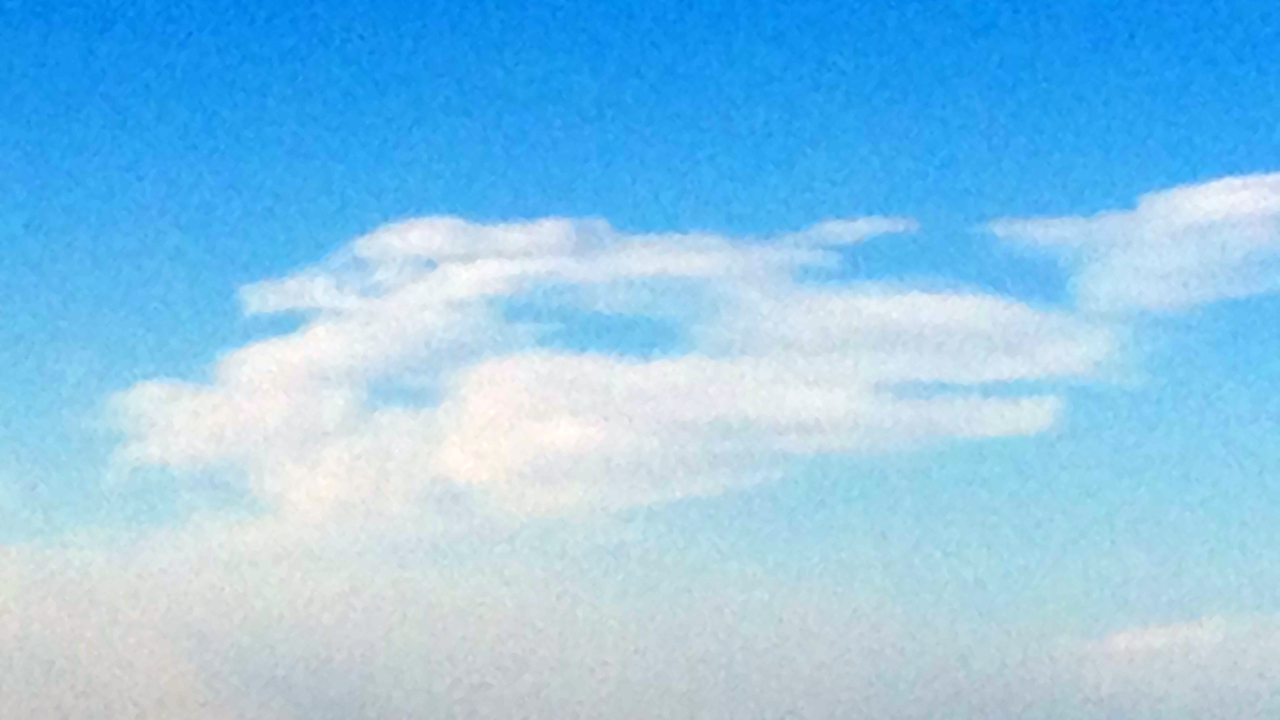
I saw this guy over the Nevada desert last week:


Cloud Dragon (Front)


Something like a dragon blowing smoke out his nose, eh?  It was extremely clear in person, but I couldn’t get a very good photograph without optical zoom.  I fiddled with the contrast and tried to enhance the details as best I could.

Here’s another from his side, several miles away.  Look closely and you can make out his neck, horns, eyes, and snout:


Cloud Dragon (Side)


Dragon in the cloud,
Are you proud?
Are you cowed?
Would you deign to flutter down
And say “hi”?

Dragon in the sky,
Tell me why
Do you cry
When the wind begins to blow
Way up there.

Dragon in the air,
Do you care
If I stare?
For I must admit I’m struck
By your gleam.

Dragon wrought of steam,
I must deem
You a dream,
As I know I’ll never see
You again.


Bene scribete.

Wednesday Writing Word: Epanalepsis

Epanalepsis

/ˌɛpənəˈlɛpsɪs/  |  EP-ah-nuh-LEP-sis


Epanalepsis is the repetition of a sentence’s (or occasionally clause’s) first word or phrase at its end.  Used for a particular sort of poetic emphasis, it can sound pretty awkward if not done carefully.


Examples:

  • Wretched is the slog, for its intentions are wretched.
  • You must be wary of the slog‘s embrace; it is cruel yet inviting, and of its allure you must be wary.


Epanalepsis.  Use it.


Bene scribete.

Wednesday Writing Word: Polyseme

Polyseme

/ˈpɒliˌsim/  |  PAUL-ee-seem


Polysemy is the semantic relation among identical words of affiliated or derived meaning.   A polyseme can be as simple as a word with multiple similar contexts (mattress pad / paw pad / mouse pad), but they are more interesting and useful when they cross part-of-speech borders.  If we say “He will bat the bat with a bat,” bat (swat) and bat (baseball) are polysemes, whereas they are merely homonyms with bat (animal).


Other examples:


Polysemy.  Use it.


Bene scribete.

The Amber Ring – Free on Kindle

The Amber Ring

When the twelve-year-old Heroine of the Fairwoods dies, her morose twin sister reluctantly joins her trusty gryphon sidekick on a quest to save the enchanted land in her stead.


The Amber Ring (my cynical fairytale novella) is now free to download on Amazon’s Kindle!  At least in the U.S. – other territories are hopefully soon to follow.

So go snag yourself a copy!  You won’t regret it.  Unless you hate it.  In which case…you’ll probably regret it.


Bene scribete.

Wednesday Writing Word: Anaphora

Anaphora

/əˈnæfərə/  |  uh-NAFF-or-uh


Anaphora means…two separate things.  Because why not coin long, obscure words for extremely specific purposes only to use them again for something completely different?  O.K., O.K., the etymology (Greek, ~”bringing back”) does lend itself toward both definitions, but still.

The first refers to using a word to stand in for something that came before it.  Typically, this just means your average pronoun-antecedent reference, but it can also apply to certain auxiliary verbs.


Examples:

  • I hate the slog because it is the worst.
  • I want to annihilate the slog; so does Billy.


The second (and more fun) anaphora is the repetition of a word or phrase at the beginning of multiple sequential sentences or clauses.  Used as emphatic redundancy.


Examples:

  • We are here to make a statement.  We are here to take a stand.  We are here to face the slog.
  • I don’t like the slog, I don’t like that it exists, and I don’t like that it doesn’t not exist.


(…technically, there’s also a third definition, but it isn’t related to linguistics, so it can just…not…be here)


Anaphora.  Use it.


Bene scribete.

Wednesday Writing Word: Antimetabole

English has a lot of words.  It has words for things you may not necessarily think there would be words for – particularly when it comes to language itself.

But words are fun, right?  Of course they are!  So, I thought I’d do a series on obscure linguistic and rhetoric terms.  If one or more of them are new to you, then the next time you use a particular device, you’ll…realize that…it’s a thing?

Anyway, let’s get started.

Antimetabole

/ˌæntɨməˈtæbəli/  |  AN-tih-meh-TAB-o-lee


Antimetabole is the reversal of a phrase when recast in a subsequent clause.  Sometimes used for poetic emphasis or humor, sometimes merely for reflection.  Think Yakov Smirnoff jokes.


Examples:

  • In knowing that the slog hates you, so should you hate the slog.
  • The slog lives to fail, and in doing so fails to live.


Antimetabole.  Use it.


Bene scribete.

A Silly Scene from The Amber Ring

Only a few days left to enter the drawing for one of three signed copies of The Amber Ring.


Goodreads Book Giveaway

The Amber Ring by A.L.  Walton

The Amber Ring

by A.L. Walton

Giveaway ends May 15, 2013.

See the giveaway details
at Goodreads.

Enter to win


And, as always, you can get the eBook for free right now at iBooks, Sony, Kobo, Nook, or download the PDF here!

Still aren’t convinced you want to give it a shot? I don’t blame you – time is precious and new things are iffy. But in an effort to maybe pique a little more interest, I thought I’d share one of my favorite scenes in the book (at least one of the most fun to write), wherein the reluctant heroine Maya and the gryphon Camden encounter the mirthfully single-minded Fairy Cobblers.

Hope you enjoy!


Amber Ring Title

“Ho!  Come in, come in!” exclaimed a boisterous little man in a tan shirt and maroon overalls, moments after Maya knocked on the door of his towering boot-shaped house.  “Honey-bear, we have customers!” he called over his shoulder.

“What’s that, sweetie-muffin?” a woman’s voice came in return.

“Customers, cherry-doll, customers!”

The woman came quickly into view, rushing up to meet Maya and Camden as they stepped through the doorway.  She wore olive overalls and a white blouse, and was clapping her hands together with excitement.  “Not just any customers, lovey-cakes, but the Heroine of the Fairwoods herself!”

“Actually,” Cam winced, holding up a talon.  “This is her sister, Maya.  Sofia’s…”

“She’s dead,” Maya said bluntly.

The couple blinked, sharing a surprised look.

“We’re very sorry to hear that,” murmured the man, taking off his cap – which matched his overalls – and holding it against his chest.

“She was just the loveliest girl,” the woman added, shaking her head at the floor.

After an awkward moment of silence, the man put back on his cap.  “Well, we’re glad to meet you in any case, Miss Maya.”  He pointed a thumb to himself.  “I’m Pilder, the husband.”

The woman copied the gesture.  “I’m Hilma, the wife.”

Together, they finished, “And we’re the Fairy Cobblers!”

Maya stared for a moment.  They were about goblin-height, these shoemaking spouses, and had pointed ears.  They looked like they were perpetually on the edge of middle age.  Lesser elves.

“Nice…to meet you,” she managed, taking her first good look around the cobblers’ combined home-and-workshop.  Shoes were piled at every wall from floor to ceiling.  Boots, sandals, clogs, loafers, heels, and slippers in all shapes and sizes covered every spare surface, spilling from shelves and closets and even the chimney.

What was it with fairy-types and shoes, anyway?

“See anything you like?” Hilma asked, noticing her eyes wander.

Maya found it hard not to gawk at the dizzying array of footwear.  There must have been over a thousand pairs just within her sight.  “There certainly are a lot of…shoes.”

“Of course!” Pilder grinned, swinging a fist across his chest.  “We’re cobblers!”

“Are you stocking these all up for a large order?”

“Well…not exactly.”  The shoemaker shrugged abashedly, scuffing the floor with his boot.  “It’s only just…not a lot of Fairwoods citizens actually wear shoes, so…they sort of kind of pile up a little bit.”

Maya raised an eyebrow.  “If the shoes you have aren’t getting taken, why keep making more?”

“Because we’re cobblers!” Hilma cheered.

Maya exhaled lengthily.

“So!”  Pilder clasped his hands together and rubbed them briskly.  “Shall we get you fitted up?”

“Good thinking, sugar-loaf!” his wife chimed.  “I’ll get the big boy.”  She was already behind Camden, grabbing at his hind paws with measuring tape in hand.  He looked back, startled, then tried to pull away gently, turning, but the elf woman spryly and persistently kept up.

“That’s all right,” Maya told the couple, holding up her hands.  “We didn’t come here to get shoes.”

Pilder froze, his expression drooping.  Then he laughed – a nasal, rickety sound – and tapped his foot.  “Didn’t come to get shoes, she says!  Did you hear that, candy-bean?  We’ve got a jokester on our hands!  Ha!  Ho!  Didn’t come to the cobblers for shoes!  That’d be a real cat-at-the-end, wouldn’t it?”  He chuckled again and winked at Maya, then turned and knelt to start digging through piles of his product.

Maya twitched.  “I’m…no, I really—we only came here to ask you a question.  Just a question.”

The cobblers both stopped what they were doing and shared a disappointed look.  “No shoes?” Pilder asked, voice nearly despondent.

“No shoes,” Maya confirmed.

Pilder rose and sighed dramatically, hunching his shoulders and slipping his hands into the pockets of his overalls.  His eyes bored holes in the ground for several seconds, and then he took a sharp breath and looked back up to Maya, jolly composure suddenly regained.  “All right, then!  No biggie!  What can we answer for you, Miss Maya?”

Maya cast a dubious glance back toward Hilma, who seemed to have undergone the same transformation, then asked, “Do you know Gnarble—Gnilling—er, Gnibling—”

“Gnarlington Gnibblemeister?” Camden saved her.

“The gnome geographer?” Hilma intoned.

“The geographer gnome, butter-button!” Pilder corrected.

Hilma put a hand to her chin.  “I don’t know, cookie-lumps, I swear it was gnome geographer…”

“Geographer gnome, coffee-bird!  He’s a gnome who is a geographer.”

“But isn’t he also a geographer who is a gnome?”

“He was a gnome before a geographer, I think you must agree!”

“So shouldn’t gnome come first?”

“No, jelly-dove, geographer is the descriptor, the distinguisher, the—”

“Do you know him?” Maya interrupted.

“Oh!” Hilma touched her chest, smiling apologetically.  “Yes, of course!  We sold him the most dashingly dapper pair of boots just a few weeks back.”

“And you delivered them to his house?”

Hilma clapped her hands.  “We sure did!”

Finally, they were getting somewhere.  “Can you tell us where he lives, then?  We need to go see him.”

The elf put on a pouty face and looked to her husband.

“Well, you see…”  Pilder scrunched up his features, making fists and tapping his knuckles together.  “The thing is…that’s confidential customer information!  We can’t just go telling anyone that, even if you are the Heroine’s sister…”

Maya sighed.  “But you’re the only ones we’ve found who seem to know his current whereabouts.  It would be a very big help to us.  I’m sure he wouldn’t mind.”  He probably actually would, Maya had to imagine, but it seemed like the thing to say.

“It’s about the goblins,” Cam added.  “He can tell us what we need to know to stop them.”

“Goblins,” Pilder grumped, nose reddening.

“Those dirty little devils stole half our leather supply,” his wife mourned.

“And their blasted weasels killed our guard-pig, Spoinky.”  Pilder shook his head, raised an eyebrow to Hilma, who nodded, then turned a grin on Maya.  “I’ll tell you what, Miss Maya – maybe we can make a little fairy bargain.  If you can answer us a riddle, then we’ll tell you where ol’ Gnarly hangs his hat.”

“A riddle?” Maya echoed.  That sounded like a hassle.

Pilder bobbed his head, then cleared his throat into his fist.  “I’m not always right, but I’m never wrong.  I have a tongue and a throat, but no mouth to speak of.  I move better when tied up.  What am I?”

Maya groaned, eyeing Camden with the expectation of shared incredulity, but saw him deep in concentration, mouthing the riddle to himself.  “A shoe,” she answered, pinching the corners of her eyes.

The cobbler blinked.  “O.K.  O.K., that may have been an easy one.  You try, caramel-puff.”

“Sure thing, vanilla-boo, I’ve got just the one!”  Hilma pumped a fist, then gave Maya a devious smile.  “You tread on my sole, yet—”

Maya cut her off, “A shoe.  Are you a shoe?”

Hilma stood in silence, her mouth still hanging open, then folded her arms and nodded gravely.  “Very clever, this one.  I think she’s got us beat, cricket-pie.”

Even Pilder seemed to double-take at that one.  “Yes, yes,” he conceded.  “Very well.  We’ll give you the gnome’s current address.  But on one condition – you must pick out a new pair of shoes to take with you!  No charge, of course.”  He winked at his wife.  “Do we have a deal?”

“You’ll tell us what we need to know if I let you give me free shoes?”  Maya slipped her hands into her pockets and shrugged.  “Yeah, that sounds fine.”


Bene scribete.