Reindeer Drama

So the other day at my sister’s place, while scrolling through Netflix in search of something ridiculous to watch, we stumble upon this curious item:


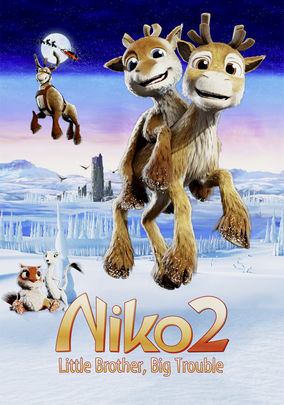
Niko 2


We initially click on it because we think we’re looking at a two-headed reindeer (alas, it was only a small reindeer being ridden by a smaller reindeer).  But then.  But then!  We read the description:


On Christmas Eve, young reindeer Niko’s world seems shattered after his mother remarries and he’s blamed when his new stepbrother is kidnapped.


I don’t even…  Reindeer drama?  What?  How could we not watch this?

Anyway, it gets better.

It turns out that the eponymous Niko can fly because his real dad is Prancer.  Prancer.  Do you get what that means?  One of Santa’s magical caribou couldn’t make his reindeer marriage work, and is now an every-other-weekend dad.  I can’t get over how starkly…modern that notion is given the context of a kids’ Christmas story about flying reindeer.  And the giant “2” on the cover tells us there was a movie before this one – was it about little Niko suffering through his parents’ (one of whom, once again, is Prancer!) messy reindeer divorce?  I like to imagine so.

The movie begins with Niko returning home from a visit with his dad to find that his mother has shacked up with her new cari-beau (…O.K., that was awful).  If that weren’t enough to dump in a kid’s lap overnight, the new guy has a younger son of his own, and mom is already pregnant with another.  Yet this isn’t even a wicked stepparent thing – the stepdad is a really nice guy.  Am I seriously watching a mature portrayal of split-family dynamics in a reindeer cartoon?

Niko himself is grudgingly adorable (even with his strangely reptilian nose).  You’d think, being the only flying reindeer in his herd, that he’d be a typical acceptance-craving misfit protagonist.  But, no.  Enjoying solitude, he envies the life of a hermit he meets, and actually utters, in chipper earnest, “I wish that nobody knew I existed.”  Yikes!


Some reindeer

That’s pretty f-d, kid


The central conflict is mostly forgettable (aside from its own strangeness), involving a wolf who for some reason lives in a high mountain cavern with a bunch of eagles who for some reason carry her around and are her devout servants.  This wolf, we learn, wants revenge on Niko for apparently having killed her brother in the first film (I presume as a way to lash out against his parents’ split-up).

The film is Finnish, and while the visuals were expectedly not on par with the Pixar/Dreamworks standard, I’d place them only one tier down.  There was some interesting detail (the reindeer, while still hyper-cute-ified, looked more like actual caribou than any other animated reindeer I can think of), the wingless flight physics were oddly amusing, and the mouth-sync looked to be re-rendered for the English dub.  No one could seem to agree on how to pronounce the names, though.

I’m not sure where I’m going with all this; I suppose I just enjoy incredulity.  So should you watch this thing?  I don’t know.  But yes, you probably should.

I’ll leave you with five more things you should know about Niko 2:

  1. I feel like it takes place in a world where humanity has disappeared, but the reindeer have taken over running Santa’s shop because they don’t know any other way of life.
  2. When you finally do see Santa, he is wearing a starry-night cape.
  3. There is an ermine (not a particularly endearing ermine, but an ermine nonetheless).
  4. For some reason, Niko learns how to go starship-style warp-speed at the end.
  5. All of this is about an animated kids’ magical flying talking Christmas reindeer movie that was actually made, and exists, here on Earth, in this reality.


Bene scribete.

Letter Palettes

A while back, I talked a bit about what you might consider when naming characters, and today I thought I would follow up by expounding specifically on the topic of pulling words out of your—well, making them up.

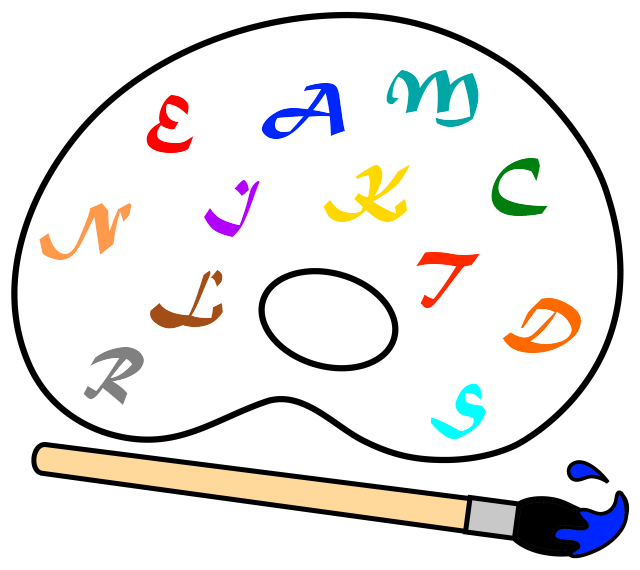
Letter Palette

Uh…


When concocting names for characters, places, or objects, we tend to favor certain sounds.  Where we gravitate is mostly informed by the language(s) we speak, and what we’ve come to associate with pre-established words and names.  Certain phonemes build specific impressions in our minds, and we rely on this context to put together fitting verbal symbols for whatever we’re assigning them to.  Whether or not this is typically done on a conscious level, identifying and mapping out your preferences (both general and circumstantial) can be a useful endeavor.

For instance, my general letter palette would look like this:


+

\

–

A C D E I K L M N R S T J O Q V X Y Z B F G H P U W


The first column represents what I feel are the most benign letters, and I use them fairly indiscriminately.  The second contains letters that I like at certain times, but aren’t as ubiquitously usable.  The third holds the letters that I tend to avoid.  When my intent is to give a name a rough or unpleasant edge, however, these preferences easily operate in reverse.  The initial and terminal letters of the word will be particularly prone to these guidelines.

Now, this chart is pretty simplistic, containing only letters from the English Roman alphabet and not taking digraphs into account, but you get the idea.  I’m calling it a letter palette (as opposed to a simply phonetic one) because visual aesthetics are also a consideration – sounds can often be written a number of ways, and their appeal can be tweaked as such.

Making a general purpose palette for yourself can be an enlightening exercise, but they become particularly handy when tailored for specific sets.  If, for your story, you need to create a distinct culture with its associated terminology and members’ names, planning out a letter palette for it can help you quicken the process while maintaining a consistent feel.


So, do you find yourself with particular letter preferences?  Could you define your own general palette?


Bene scribete.

Elephants?

Lacking the state of mind required to do a thoughtful post, I shall now write a stupid poem about elephants.


It's an elephant


Elephants are big, they say.
They’re bigger than your face.
They’re smaller than a planet, though,
And can’t survive in space.

Elephants are grey, they say.
They’re whiter than the night.
Yet blacker than the falling snow,
And nowhere near as bright.

Elephants are tough, they say.
They’re tougher than a fly.
Unless that fly is huge, you know,
And equally as sly.

Elephants are shrewd, they say.
They never do forget.
If that is true, then I should go
Before these words upset.


Have a happy new year, everyone!


Bene scribete.

I Hate You, The Slog

The slog hates you

I hate you, the slog.


I hate you, the slog.

I hate you, the slog.

I hate you, the slog.

I hate you, the slog.

I hate you, the slog.

I hate you, the slog.

I hate you, the slog.

I hate you, the slog.

I hate you, the slog.

I hate you, the slog.

I hate you, the slog.

I hate you, the slog.

I hate you, the slog.

I hate you, the slog.

I hate you, the slog.

I hate you, the slog.

I hate you, the slog.

I hate you, the slog.

I hate you, the slog.

I hate you, the slog.


You are not very nice
and now I’ve said it twenty-twice.


Bene scribete.

Novella Excerpt

The first draft of The Amber Ring is completed, and at 98 pages, I find myself with an intended short story that became a novelette that’s now closer to a novella.

It keeps getting bigger.

Oops?


As I work on putting together a presentable second draft for test reading, I thought I would share a short little scene to give a brief glimpse at its protagonist, twelve-year-old Maya Corona.


       As Maya half-attentively filled out the answers to her math test, she found her eyes drifting toward the clock above Ms. Patch’s desk, subconsciously counting down the minutes, as she often did, until the tedium of the school day was over.
       Her wandering eyes also noticed Braden Thomas, who sat at the desk to her right, surreptitiously sneaking a glance at her paper in regular intervals. She contemplated calling him out, or even writing down the wrong answers on purpose, but then decided to just let him cheat. If he could get through school without bothering to learn anything for himself, he would be one less person to pose any real competition for an eventual job, which people were always saying was hard to get these days.
       As she shifted to give him a better view of her exam, she felt something grind against her leg. It was Sofia’s ring; she had left it in her pocket.
       Her mind went unwillingly to the previous night. It had been strange to see Cam again. To think of him without Sofia. His charismatic pluck replaced with that crestfallen timidity. Maya wanted to leave the Fairwoods behind her, and had expected them not to not think twice about returning the favor. Her involvement had been limited to the occasional tag-along with her sister, and she had never done anything of importance there. She had been clear on where she stood, though, hadn’t she? Would they leave her alone, now?
       “Two minutes,” Ms. Patch droned.
       At the edge of her vision Maya saw Braden gripping his pencil tightly, throwing nervous glances her way. Quickly, to his obvious relief, she scribbled down the remaining answers to the test.


Bene scribete.

The Amber Ring

Gold Amber Ring

At the age of ten, Sofia Corona saved the Fairwoods from the malevolent grasp of the Cedar Witch and her goblin army.

Two years later, she drowned unceremoniously in the lake behind her Oregon home.

In the months following the Heroine’s death, when the Fairwoods face a resurgence of goblin attacks, they are forced to turn to Sofia’s cynical twin sister, Maya, for help. But despite an earnest plea from her sister’s faithful gryphon companion, Maya wants nothing more to do with the enchanted land. The request continues to plague her mind, however, and she can’t help but wonder if doing this one last favor will give her the closure she needs to accept her sister’s death and move on with her life.


Such is the premise to my side-project novelette, The Amber Ring, a sort of semi-satirical dark fairytale. I’m just about done with the first draft, and was curious if the concept would appeal to anyone reading this. So – interest piqued? Let me know!


Bene scribete.

SoundCloud

SoundCloud Logo

Hear the…cloud.


In contemplating a better way to show off music in the e-land, for some reason it only recently occurred to me to try out SoundCloud.  Turns out it’s a fairly nifty little service.

The premise is simple – users upload sound and music, and others can then stream it to their computers and devices, more or less like a sans-video YouTube (strange that these two things didn’t happen the other way around, but…whatever).  A free account will let you upload two hours’ worth of audio (assuming reasonable compression, that’s likely less than 200MB – small in comparison to most of today’s big free hosting services, but hey, free is still free, and there don’t appear to be any ads).  You’re also capped at 100 downloads per track, assuming you enable direct downloads (which it’s cool that you can).  There are also some arbitrary limitations, such as only being able to create three different sets/groups/organizational what-have-yous to put your tracks in, but overall, it’s plenty sufficient for sharing out a few dozen songs or so.

Perhaps handiest of all, you can neatly embed a player for a track or entire setlist just about anywhere, even here in WordPress!


These are some old synthesizer compositions I did ten or more years ago and figured I’d stick on there for fun. Now that I have much better equipment, I might see about redoing some of them…

So, am I late to the party?  Do any of you out there use SoundCloud?  Or have you found any other good audio sharing services?


Also, I just noticed that Dictionary.com‘s word of the day is empurple – to make or become purple.  I…kind of find it fantastic that that’s a thing.


Bene scribete.

Names

Naming characters is an important, sometimes fun, sometimes tricky part of the fiction-writing process, and is something I alternately love and dread.  A name is a symbol that represents someone, both offering identity to those it is attached to, and in turn adopting it from them.

I find that there are generally three ways (or a mix thereof) to come up with and decide upon those monikers:

  • Namesakes.  One simple way to name a character is to do so (in part or in whole) after someone else – someone you know, someone from history, or even another character from some other work.  Such a name will probably already have strong connotations for you, and those might just be appropriate for who you’re writing.
  • Meaning.  The advantage writers have over parents in the naming department is the foreknowledge of who this person or creature they’re creating will be, and can choose a name that is symbolically fitting (or ironically incongruous).  This can be in the form of a name that’s also a word in the operative language (Will, Victor, Dawn, Amber, etc.), a word from another language, or something suitable trolled from babynames.com.  (>^-‘)>
  • Aesthetics.  Often, just focusing on how a name sounds and looks is all you need to do.  I tend to lean mostly in this direction, relying heavily on phonetics when working out what to call characters.  Sounds used together in specific ways can evoke qualities of roughness, delicacy, power, playfulness, and a number of other feelings to subconsciously color the impression of the named.  Spelling should also be a consideration; the visual appeal of different letter arrangements can have the same sort of impact.  All of this goes for whether you’re picking a common name or making up a new one (though I could probably do a whole separate post on the latter!).


However you end up choosing your names, there is one thing I always recommend.


Tip of a fishName Your Characters As Soon As Possible.

The less you’ve decided about a character, the easier it is to settle on a name.  At least that’s always been the case for me.  Sometimes, the name will even help slightly with further direction!

The more important a character is, the more true this becomes.  If you have a strong image of the character in mind by the time you start thinking seriously about what to call them, picking a name that feels right can be a daunting task.  It means you have all the more context and nuance to map to that all-important referential symbol.  It’ll seem like you have to find a name that already represents all facets of the character, rather than letting the name come to do so naturally as the character develops.


But what about you?  Do you agonize over the subtleties of your characters’ names?  How do you like to go about choosing them?


Bene scribete.

Chapter 1-4

This week, I’m sharing out the current drafts of the prologue and first chapter of The Book with a little bit of commentary.  Click here if you’d like to to start from the beginning!


O.K., last one for now!  In the final scene of the first chapter, we switch back to Lennais for a closer look at his place in the world.  The concept of the caledoran (animal-people) is introduced, we get the first glimpse of the princess, Elysa (a later focal character), and we meet the pompous Sir Gammond. An older version of this scene was how I had originally handled Lennais’s introduction, but the prior sequence ended up feeling like a much better starting point.


Dummy Cover
 

(C1-4)

 
“I’d heard it was dragons as did it,” Sir Dennen Farr was saying, a younger knight of the First Order, clean shaven with a shock of sand colored curls.  “Can’t say I fought one of them just quite yet, but I’d wager a taste of steel would send ‘em running back to that queen o’ theirs.”

“I wouldn’t be so certain of that,” countered Sir Norris Blackwood, chewing on a leg of roast turkey.  “They spit fire and lightning and any other manner of nastiness if tales be true; why would they fear a sword?”  He was an older knight, with a short beard and peppered black hair, his right cheek bearing a scar from the slash that took most of his ear.

“Not the sword, Norris, but the man who wields it.”  Sir Dennen made a flourish with his knife.  “Lastern’s finest.  Isn’t that right, Commander?”

Lennais looked up from his stew, the last of which he was mopping up with a chunk of soft golden bread.  “No greater knights could His Majesty find.”  He took a bite of the bread, watching the men beam from the endorsement.  “And a great knight should remember to demonstrate the virtue of humility as an example for our brothers-in-arms.”  Dennen shrugged affably, but bowed his head in acknowledgement.  “No one can tell us exactly what is happening outside our walls at the moment,” Lennais continued, “but we shall find the truth soon enough, and if swords are needed, I shall be the first to raise mine.  Until then, let us not play part in the spreading of this troubling gossip.”  The others nodded their understanding as he rose, gathering his empty cup into his bowl.

The knight commander made his way through the crowded dining hall toward the adjoining kitchen.  As he passed the high table, he spotted the king’s eldest living child, Elysa, sitting alone.  She was a girl of sixteen, draped in a laced white gown, long dark auburn hair tied back and calm hazel eyes pondering a colorful arrangement of fruit before her.

“Sir Lennais,” she said softly as he passed.

He faced her and rendered a bow.  “Good evening, Your Highness.  Not dining with your father, today?”

The princess picked up a thin slice of green melon.  “I had not much of an appetite, earlier.  Though I suppose it has not improved as much as I would have liked.  In truth, I may have simply wished for an excuse to be amidst the others who share the castle without the distraction of familial obligations.”  She set the melon back down, then turned her eyes to the knight.  “I hear from my uncle that you have settled the matter of the counterfeits?”

“For the anes, at least.”

“Was the coin of Avenic origin?”

“I fear thus.  Nevertheless, the supplier has been named, and can expect to be turned away at the harbor.”

Elysa nodded slowly, looking back to her melon slice as she turned it over in her hand again.  “I am often convinced we should be better off to readopt the Indolic Standard.”

“May that it would be, though I am certain it is no matter with which you need worry yourself so.”

“There I must disagree with you, Commander.  So many concerns have few enough who bother to consider them.”  She offered a small smile, a succinct and cordial expression crafted perfectly by her upbringing to mask the distance in her eyes.  “Good evening, Lennais.”

“Your Highness.”  He bowed and continued onward, stepping into the kitchen, then set his dishes amidst the piles of others waiting to be cleaned.

“Did you enjoy your supper, Commander?” a cheerful voice rang beside him.

“Delightful, as always, Liria,” Lennais regarded the young lessiporan warmly as she ladled stew into another row of bowls for the castle’s hungry staff and attendants.  Lessip oran translated to something in the manner of ‘rabbit folk’ from the old fay tongue, which was a simple if not fittingly concise way to describe the race.  Liria’s size and body were of roughly human proportion, but her features were otherwise leporine.  Like other varieties of caledoran, she had the head and tail of the animal, as well as the feet, although they lacked the pads and digitigrade structure of the more commonly seen carnivorous mammals.  Her hands still seemed half-paw, but that did not appear to inhibit her aptitude in the kitchen.

“Good, good,” Liria said, rubbing her brow.  “That’s what I like to hear.”  She was covered in a coat of soft grey-wheat fur, with a light cream encircling her eyes, down her chin and chest, and on her underarms and toes.  Her long ears, while naturally upright, were pulled down and back while she worked, as a woman might hold her hair.  Despite the fur, she wore a loose-fitting tunic and breeches over her ungracefully thin frame, slotted to hold a variety of cooking utensils.

“There was something new about the stew, I think.  A different seasoning, perhaps?” Lennais asked, gesturing toward the pot she held.

“You noticed?” she grinned, setting the pot down and picking up a basket of fresh-baked rolls, placing one by each bowl.  “Our stocks are out of the black pepper I use as custom, so I tried a bit of turmeric in its place.  A suitable change, then?”

“Certainly.  It seemed to bring out a livelier flavor.”  Lennais was not entirely sure what turmeric was, but he did like what it did to the dish; Liria’s experimentation produced highly palatable results more often than not.  “Serve it that way from now and hence, and I should not count it a shame.”

The lessiporan bowed courteously.  “I am happy to please you, sir.”  She turned away and set to chopping a pile of long purple carrots for another batch.  “I haven’t seen Father this evening.  I hope you will see that he comes for his supper?  You know how cross he can be when he hasn’t eaten.”  She twitched her nose playfully at him.

“I hardly think that will be necessary,” scoffed Sir Gammond Hornswell, stepping up to the serving counter.  The captain’s son was a few years junior to Lennais, and had the same lean build.  Locks as dark as pitch fell from his scalp in loose curls, framing a handsome face which was rarely seen without either a self-satisfied smirk or a sneer of distaste.

It was the latter he wore today.  “Commander,” he greeted flatly, eyes flickering toward Lennais before disdainfully surveying his meal options.  In skill, no one could deny that he was Galfrey’s son; his swordsmanship had earned him a place in the First Order, though it was clear enough he believed himself entitled to something more.

“Hello, Gammond,” Liria smiled nervously.  “I—I hope—”

“Sir Gammond,” the knight corrected, folding his arms.  “You will address me properly, Liria.  Your animal mind is not too simple to understand your place, is it?”

She bowed her head respectfully.  “No, sir.”

“Then see that you heed it.”  He called up his smirk.  “And don’t let me catch you spouting any more of this ‘Father’ talk.”

Lennais offered the other knight a cold look, but said nothing.  It was not his place to involve himself in a family affair, which was, oddly enough, exactly what this was.  Ten years prior, Sir Galfrey had caught Liria stealing from the food supply stores, and chose to put the eight-year-old orphan in the kitchens to work off her debt.  There, she soon displayed a culinary creativity which caught the interest of the other staff, and eventually rose from scullion to head cook when King Malcolm had learned she was behind several of his new favorite dishes.

Galfrey, who had lost his wife during the stillbirth of his own daughter, had grown fond of the girl, and despite murmurings of protest, gave her the honor of naming her part of the Hornswell household.  It was a small token of conciliation to those who felt it an affront to work under a caledoran orphan, but enough that it would be untoward for most to speak against her standing.

Gammond picked up a bowl of stew and sniffed at it, wrinkling his nose.  “I had best not find any rabbit hair in this.  I should hate for you to tarnish our food as you do the Hornswell name.”  He turned to depart, and Lennais met Liria’s eyes with something between apology and sympathy before following.

“The whole damned court is up in arms over this Densbury business,” Gammond complained to him as they made their way back through the dining hall, glancing around the room.

“It represents a threat to Lasterene ground and Lasterene people,” Lennais reminded him.  “Do you believe it is not a matter to be taken seriously?”

“As seriously as it needs to be.  I see no cause for getting spooked over it.”  He shook his head.  “What force in all of Candaela Minor can stand against the organized might of Lastern?  Whoever sacked the colony will soon enough be rooted out and crushed.”

“An optimistic view of the long term,” Lennais admitted, “but for the time being, those who have not the fortune to live within stone walls may yet have something to fear.”

“A distraction which can only dilute our efforts to resolve the matter quickly,” Gammond snorted, taking a seat at the First Order’s table.  “The serfs must learn to have confidence in His Majesty’s knights.  We ought to send out a peacekeeping force to calm the streets now before rumors get any more out of hand.”

“Mayhap we shall.”  Lennais put a hand on Gammond’s shoulder.  “And I believe I know the perfect man to lead it.”

Gammond looked questioningly up at his commander, his face darkening as realization set in.  Lennais offered a small smile and a curt nod, then turned to exit the hall.  Gammond protested, “Surely you can’t—any knight of the court would—”

“—do well enough, I imagine,” Lennais finished.  “Although the captain would wish that such a delicate matter employ the expertise of a knight of the highest caliber, would you not agree?”  He looked back over his shoulder, no trace of mirth remaining in his features.  “I should hate to tarnish the Hornswell name by offering any less.”


Bene scribete.