Public Service Announcement: “Goldfish Mac & Cheese”

Goldfish "Mac & Cheese" display at Wal*Mart

Goldfish Mac & Cheese?
Beware, my friends – it’s a trap;
Sadness lives in here.


I suppose I should start by saying that I’m not a big fan of dry-box macaroni and cheese (really, Stouffer’s frozen stuff is the only pre-made kind of any sort I find to be worthwhile).  The other day at the grocery, however, I saw that Pepperidge Farm had decided to throw its hat into the game, and at that very moment I was apparently hungry enough to think, “Hey, Pepperidge Farm makes some really good stuff (mmm, Milanos), so this might actually be decent!”  It was a long day, and Goldfish Crackers in creamy pasta-y form sounded kind of good, all right?

…stop judging me.  (>^-‘)>

Anyway, I was feeling adventurous enough to try the “pizza” kind, so I whipped up a batch thereof.  The smell…was frightening.

And then…and then I tasted it.

Now, I don’t know in whose mind this substance could taste like pizza.  Or cheese.  Or food, for that matter.  No, the flavor was more akin to dark, tangy, bitter misery.  To wit, if you were to subtractively combine Top Ramen with Totino’s party pizzas, this would taste cheaper still.  I tried to drown it out with pepper and garlic, but even so I was only able to stomach a few bites before throwing the rest away – something I am typically loath to do with any food, no matter how inexpensive.

But as those few bites sat upon my tongue, I found myself wondering who “Goldfish Mac & Cheese” could possibly be for, as I was unable to imagine any person who would simultaneously actually exist and enjoy its taste.  Even if I were to expand my consideration to theoretical people, and the basis for one such theoretical person (from which all other characteristics were derived) proposes that he is someone who would enjoy “Goldfish Mac & Cheese”, I can only conclude that he would also hate it.  It just made me angry at food in general for the rest of the day.

So I guess all I’m really trying to say is that, if you happen to find yourself in a position where you might consider putting Pepperidge Farm’s “Goldfish Mac & Cheese” into your body, well, you’ve just got to not do it, that’s all.


Bene scribete.

Upcoming eBook Services

It’s been a good week for the world of eBooks, with not just one, but two separate announcements – one from someone big, one from someone small – on new ways we’ll soon have to get these things on our devices.


MatchBook Logo

Amazon’s MatchBook service, launching next month, is just the sort of thing I’ve been waiting for – buy a physical copy of the book, and get the digital one for free.  Sensible enough, right?  Well, actually, it’s buy the book in print and get the eBook for $2.99 or less, but I’m optimistic that publishers will eventually gravitate toward electing the free option.  The film industry has done this with movies for a while now (DVDs and Blu-rays all seem to come with free digital downloads these days), and Amazon itself gives away free MP3s with CD purchases.  It seems a little odd that books – far more basic than these other media types – are once again last to the party (and not even fully committed to complimentary yet), but as they say, it’s better late than never.

Naturally, the service is limited to Kindle eBooks, but Kindle applications are ubiquitous, and Amazon does have the largest library.  Plus, as is the norm with the industry, B&N and others will likely soon enough follow suit.  So I’d call it a good thing all around, and a smart move on Amazon’s part that will simultaneously support both print and digital media, keeping readers and publishers happy.  I was even excited about the prospect of The Amber Ring being be a free download with the purchase of its paperback, until I quickly remembered that the Kindle version is free anyway…  (>^-‘)>


Oyster Books logo

Oyster – a much-anticipated “Netflix for books”, as it were – made its initial launch yesterday as an invite-only iPhone application, with open enrollment and support for other devices to come over time.  For $9.95 a month, Oyster offers unlimited reading of any and all books in its library (100,000 and growing).  HarperCollins is the only big house they’ve got on board to start with, but if they can secure one, and the service takes off, it’s not too hard to imagine that they will score others.  For the meantime, it looks like they’re also happy to work with smaller presses and independent authors.

Again, with services like Netflix and Spotify having existed for years, it’s strange to think that it’s taken this long for anyone to adopt such a model with books, but here’s to hoping that it does as well as its counterparts!


Bene scribete.

Literally?

Confused man


A few days ago, a friend of mine posted an article on Facebook concerning the use of the word ‘literally’ in the increasingly popular figurative sense.  The article unfortunately seems to have disappeared at the moment, but the gist of it was pointing out that most dictionaries have now appended this alternate meaning to the word’s definition, and explaining that this usage may have originated with, or was at least first recorded in, Frances Brooke’s The History of Emily Montague (published in 1769).

Naturally, this sparked a conversation on whether or not this sort of language development is acceptable.  Prior to encountering this, I had no idea there was even a movement to gain legitimacy for this non-literal use of ‘literally’, as it’s kind of the butt of diction jokes everywhere, but there are apparently many who feel that rejecting it (or any other semantic shift) amounts to needless linguistic authoritarianism.

My own take on the matter was as such:

The evolution of language and words is a natural, inevitable thing, and in the general case it is something to be embraced.  That said, stability is a necessity of language’s functionality, thus any given modification cannot be assumed to possess intrinsic merit.

Language is a tool of communication, of which clarity is an important aspect, and I should assert that preserving its ability to convey meaning is a not an unworthy goal, particularly in an instance such as this wherein the suggested secondary interpretation of a term, when used in the same context, implies something strictly antithetical to what the accepted definition would.  This dilution of precision, while admittedly neither entirely untenable nor without precedent, is nevertheless customarily unfavorable.

(That the word was used in this sense a few centuries ago scarcely argues its virtue – words have been used improperly since words were first words, and most such misuses do not incur a change in their respective societal perceptions!)

But, I’ll concede to being guilty of a little linguistic snobbery.  People will say what they will, and language will be thus, regardless of what may or may not be in its own best interest.  (>^-‘)>


I’m curious to hear where others lie on the issue, though.  Any thoughts to add?


Bene scribete.

The Woodlander

The Woodlander - Kirk Watson


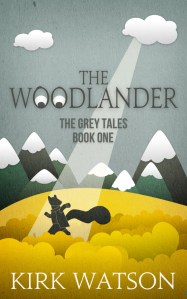
A little while back, I had the distinct pleasure of serving as editor for Kirk Watson’s fantasy adventure, The Woodlander.  Watson himself pitched the novel as “The Most Dangerous Game” meets Fantastic Mr. Fox, and after jumping at that hook, I found it to be a pretty apt encapsulation!

An animal tale for an older audience (teens and up), the story focuses on a downtrodden squirrel named John Grey – a reporter whose cynical disposition and snarky quips are reminiscent of a hardboiled detective of ’30s pulp, and an immediately likeable protagonist for it.  Six months after a terrible tragedy divested John of his will to write, a strange encounter outside a tavern prompts the squirrel to pull himself together for one more assignment, but when his investigation takes him to the less savory parts of town, he quickly finds himself a part of the story he meant to report.

Well-written with plenty of action, humor, and heart, this is a book I would gladly recommend even if I had nothing to do with it.  (>^-‘)>

The Woodlander is the first volume of The Grey Tales series, and is currently available for 99¢ on Kindle – a tough deal to beat for a full-length novel of this caliber, so take advantage of it while you can!

And don’t forget to check out the author at http://thegreytales.com/


Bene scribete.

On Ghostwriting

Writing ghost

Money is the universal shortcut.  You can get just about anything with it.  Sometimes for a lot less than you’d think.

In my line of editing work, I come across a lot of want-ads for ghostwriting.  Now, I can look the other way when it comes to surrogate writing in certain scenarios – you’re a not-so-eloquent public figure who needs the notes and rough drafts for your topical book or memoir worked into something fluid?  Sure, O.K.  But I’m talking about ghostwriting for fiction.  Things like: “I need a sci-fi novel written.  Preferably something to do with space exploration.  Need it to be around 70,000-80,000 words.  Must sign NDA and forgo copyright. I’m willing to pay up to $500.”  (No joke!)  It shouldn’t come as a surprise that there would be a few people out there with that kind of audacity, but I see a dozen of these a day.  And what’s even crazier – these listings get a ton of responses!

It’s a little hard to believe.  I can’t see the appeal to either side of this arrangement.  Does anyone really love the writing process itself so much that they’d be willing to undertake the grueling process of producing a novel for pennies an hour, only to forsake any rights and claims to their own creation upon completion?  Is anyone so desperately enamored with the idea of being known as a writer that they would be satisfied with the hollow “achievement” of putting their name on someone else’s work?  Apparently the answer is a disturbingly frequent yes on both accounts – it’s a big industry.  It baffles me.  It really does.

If I’m being entirely honest, I suppose I would consider ghostwriting a novel for someone if I were offered an absurd amount of money to do so (financial freedom to pursue other projects is nothing to take lightly), but these jobs are being offered at too comical a salary to be considered “just work”.  I could never quite comprehend the sentiment behind the other side of the table, though.  If you want to be a writer then, you know – write!  At the very least seek a co-author if you need help with a specific book.  I simply can’t see fiction-ghostwriting as something that has any reason to be a thing – particularly not as big of a thing as it is.

But I’m curious to hear others’ thoughts on the matter.  Have you ever had experience with ghostwriting (from either side)?  Would you ever consider it?  Am I taking crazy pills?


Bene scribete.


(Want to win a free signed copy of the non-ghostwritten The Amber Ring? Check the link for details. No entrants yet, so your odds are sitting at 100%!)


Death Scene: Turkish Style

Death scenes can be tricky to write, particularly for primary characters.  Do too little, and it can feel jarringly abrupt, not allowing the reader (or watcher) to properly absorb within the moment that the character has legitimately just met his end.

Do too much, on the other hand, and you may end up with something like this:


(…all right, I may have just wanted an excuse to post that video)


Bene scribete.

Reading Habits

Throwing a book


One of my fellow book-clubbers* came across this interesting article on personal reading rules (which in turn was inspired by this one), and I thought I’d continue the chain here, as it makes for a fun topic of discussion.


So here were my own responses:

  • I often find myself reading five or so books at a time.  I don’t necessarily like to…it just happens.
  • I don’t use bookmarks.  I just remember what page I left off on.
  • I suppose I appreciate the idea of dust jackets (fancy graphic cover AND classy textured actual cover), but in practice I also kind of hate them.  I try to leave them on when reading, since I don’t like having to find somewhere to put them, but they’re just…slippery and annoying.  I’d prefer all hardbacks be print-on casebound.
  • I take care to preserve not only the spine, but also the page edges.  I can’t stand the green streaks that manifest toward the middle from prolonged holding (mainly an issue with the cheaper acid paper used in mass market paperbacks).
  • I hate writing in books, even if they’re workbooks or madlibs or what-have-you meant for writing in.
  • My eyes will sometimes jump to the middle or bottom of a page to spite me (particularly in interesting passages).  When this gets particularly bad, I’ll put a hand over the lower part of the page to prevent myself from reading ahead.
  • A book has to be really, really awful or boring for me to actively give up on it once I’ve committed to reading it.  But I tend to have a longer attention span than most (ironically enough, considering the first point), and am more willing to force myself to seek the merit in things.


Anyone else up for confessing your own?  (>^-‘)>


*Does that sound like someone who beats books with a stick?


Bene scribete.

Nightmare Fudge

Scary Fudge

Yep, it’s green.


But WAIT!  This isn’t a recipe ‘blog!

Well, shut up, you (AKA me).  Because…whatever and stuff.

Sometimes snacks are nice when writing, O.K.?

Anyway, I used to make fudge a lot.  It tastes nice.  But making fudge the “proper” way involves uncommon ingredients like extra-fine baking sugar, evaporated milk, and marshmallow goop; it also requires precise temperatures, and can generally be kind of an ordeal.  Recently, however, I came across the notion of using canned frosting as a fudge base.  It sounded a little crazy, but the basic makeup is pretty similar, so I thought I’d give it a try.

It turned out…like fudge.  And was actually pretty dang good.  I’m not sure whether to be indignant about having done things the hard way all this time, or excited about the possibilities of this method. Probably both.

Want to give it shot?  Here’s what you’ll need:


Blue Funfetti FrostingChocolate Chips


That’s it. Seriously. A 12oz bag of chocolate chips, and a 15.6oz can of blue vanilla “Funfetti” frosting (for some reason the store didn’t have any regular vanilla frosting, so fine, thought I – I’ll just make it a thing).


Prepare as such:


  1. Melt the frosting in a sauce pan until it’s just about bubbling, stirring constantly.
  2. Mix in the chocolate chips until you have a nasty, homogeneous green paste (I use a beater prong for this type of stuff).
  3. Remove the pan from heat and keep stirring as it thickens (it tends to want to separate).
  4. Pour in the sprinkle things from the frosting (how are you supposed to open that sub-lid, anyway?)
  5. Dump the mixture into a foil-lined 8×8 pan or pie tin (it should come out in a mostly-clean, cohesive glop) and smooth it out.
  6. Refrigerate for a couple of hours.
  7. Lift the fudge block out with the foil, turn it over, and dump it onto a plate or cutting board.
  8. Chop the block into haphazard chunks, stick ’em in a Ziploc bag, and store at room temperature.

And thus you will have the easiest fudge ever. Which happens to be horrifyingly green. With multicolored crunchy splotches.


Bene edite.