
Once upon a time there was a bird that found a hidden treasure.
Except that instead of finding treasure, it was sick. And it wasn’t a bird at all – it was me. And rather than once upon a time, it was right now.
It was lame.
Bene vīvite.
Once upon a time there was a bird that found a hidden treasure.
Except that instead of finding treasure, it was sick. And it wasn’t a bird at all – it was me. And rather than once upon a time, it was right now.
It was lame.
Bene vīvite.
Here’s another one of these, I guess, why not.
WHY NOT.

“No, that simply will not do,” muttered Dincton Flatt, dismissing yet another chair as he wandered down the expansive aisles of the Sitting King Emporium.
“You can’t be too picky, sir,” offered his robot coyote, trotting alongside him. “Surely there must be something here you fancy. It is, after all, the premiere shop in Danesbury for all your sitting needs.”
“My needs are precise, Featherby. I must be comfortable as a mouse who is – well, you must know, extremely comfortable. And it must make me look important – but not as though I’m trying to look important. It’s a delicate balance, you realize.”
“If you say so, sir.” Featherby trotted up and sniffed at another seat – a wide, over-padded avocado-green affair. “What of this one, then? I’d say it would do your bum a service.”
“Heavens, Featherby.” Flatt put a hand to his chest, eyes rolling over the thing in mortification. “It is a punishment to behold.”
“Certainly unpretentious, yes? Yet only someone of obvious importance would dare let himself be seen perched on such a seat. And it looks quite comfortable, you must admit.”
“I shall admit to nothing. Surely it must be as far from delivering a pleasant sitting experience as one might imagine would be a pair of large and unforgiving needles protruding haphazardly and expectantly from the earth.”
“That is startling imagery, sir. Nevertheless, you will not know unless you give it a try.” Featherby hopped up onto it and bounced up and down a little.
Flatt narrowed his gaze, then turned and continued walking. “Remind me to have your reasoning algorithms refined.”
The coyote sighed and jumped back down to follow.
“Can I help you find something?” a friendly but businesslike voice reached Flatt’s ear. A sharply dressed middle-aged woman approached him from a couple aisles away, navigating awkwardly between the tightly packed rows of chairs to get to him. She was carrying a clipboard. It was always clipboards.
“You’re likely to be of more help than him, I suppose.” Flatt nodded toward Featherby.
The attendant let out a small gasp on noticing the coyote. “What? Er, sir, I don’t think you’re allowed–”
“Hold the cream,” Flatt interrupted, eyes landing on a tall, ruddy-brown wingback the next row over, elegantly stitched and expertly beaded. He squeezed through a pair of plush recliners to reach it, nearly tripping over them and falling on his face, but no, gravity would not best him on this day.
“Sir?” the attendant called after him.
“This one.” He stroked the perfect chair in admiration. “Yes. This is the one. Have it prepared for me, will you?”
The attendant scanned her clipboard, offering a sympathetic smile. “I do apologize, but that item has already been claimed.”
Flatt grew pale in horror. “What? No, you must be–by whom?” He searched the chair in a desperate fit, hands landing upon a small blue tag. Across it was written one word – a word which Flatt whispered in despondency: “Cheverly.” He slumped miserably down into it, becoming only more distraught as it greeted his posterior with immaculate support.
Featherby hopped up onto his master’s lap and nosed his face. “Take heart, sir. There is still the green one.”
Flatt leaned his head back, frown threatening to unravel his features. “Oh, Featherby, why did I build you?”
“For good times, sir.”
Bene scribete.
My brother wrote and directed a silly little short film.
It is entirely possibly to view it below.
Entirely.
Bene scribete.

When writing fiction, ensuring that your characters’ actions and motivations feel natural is key to telling a relatable story – or at least one that doesn’t have your readers shaking their heads in disbelief. We can only take so many plot contrivances before we lose the ability to take a narrative seriously. But does that mean everything in a story should unfold in a strictly realistic manner?
It can be a tricky balance to strike. Minimizing the required suspension of disbelief is a worthy goal, but it’s also important not to use realism as an excuse for bad storytelling. After all, real life isn’t often that interesting, and things not happening as they usually would is the gist of what makes a story worth telling. No one excitedly calls up a friend to explain how normal of a day she had.
The premise and certain major plot points of a story may not always be particularly realistic, but if they are in service to a theme – a powerful driving force in narrative by which reality is not bound – then that doesn’t have to be a bad thing. We can usually swallow a few unlikely coincidences for the sake of poetic meaning, especially when they can (and should) still be grounded by the details surrounding them and characters’ reactions to them. It’s also good to keep in mind that when people complain about unrealism, what they’re often actually harping on are stereotypes and clichés, ironically because they are, much like reality, regularly encountered. What they truly want to see is something fresh and different.
Internal consistency is imperative, and reality is a good base model for how events might unfold in a given scenario, but don’t let a singular pursuit of realism steer you away from weaving a cohesive narrative. If being unrealistic tells a better story, then tell the better story. We’re all just making stuff up, anyway. (>^-‘)>
Bene scribete.
Sear is back at it – this time with some fascinating new information on everyone’s favorite guilt-ridden pastry.
I don’t know about you, but I kind of want a doughnut.
Bene scribete.
Yeah, I don’t know.
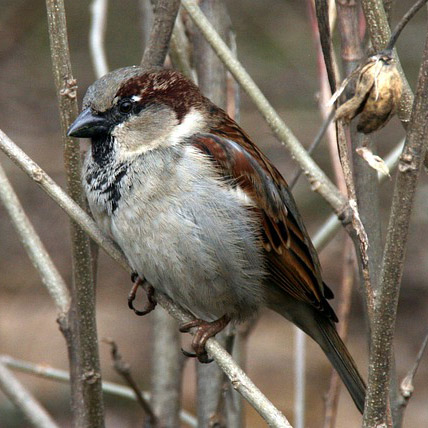
There was a bird. It turns out it was a sparrow, let’s say. It was a terribly grumpy sparrow, which, as you might imagine, made it a very bothersome creature.
It flew around the forest, day after day, looking for sugar and saying unkind things about the other animals in its passive-aggressive manner. It was rude as well as grumpy, it seems.
One day, the sparrow landed next to an incredibly stupid frog.
“Helloooo,” said the frog. “Are you a fox?”
“No,” replied the sparrow. “I am not a fox, you incredibly stupid frog. I am a bird, of which a fox is clearly not a type.”
“Oh,” said the frog with a thunderous ribbit, then hopped around in circles.
The sparrow fluttered its wings and chirped in irritation. “Look – I realize that you are incredibly stupid, but do you know where I might find some sugar?”
The frog jostled and regarded the sparrow with a distant, wavering look reminiscent of the way a tree might gaze upon the sky – which is to say, stupidly. “Is sugar the black things that fly around and I eat them?” burbled the stupid frog.
“Not,” spat the sparrow, “in the slightest.” It was at that very moment – or perhaps the moment immediately thereafter – that the sparrow murdered the frog, which was, one must agree, a gross overreaction. But the sparrow was quite grumpy, you might recall.
Thereafter, the sparrow flew around some more until it came upon a fox and alighted on a branch overhead.
“You – fox,” he called. The fox looked up. “Can you believe I was mistaken for you not long ago?”
The fox wrinkled her nose. “No, I don’t believe that I can. You’re a bird, of which a fox–”
“Is clearly not a type. Precisely.”
The fox tilted her head. “Say, sparrow, now that we are speaking, would you mind coming down closer so that we may chat more amicably?”
“Of course not,” huffed the sparrow.
“Whyever not?” asked the fox, licking her chops.
“Because you mean to eat me up. I am grumpy, not stupid. The frog – now, the frog was stupid. Though I do believe I murdered him.”
“That sounds awful.”
“Only in that he was not made of sugar.” The sparrow squawked and fluttered off, fed up with another tiresome day.
Bene scribete.

The fourth volume of Shauna Scheets‘s Steampunk Serials is now available for purchase!
You can pick up a digital copy of it and the three preceding issues for 99¢ each at Amazon and other eBook retailers.
Bene scribete.

I was recently tasked with whipping up a piece of trailer/promotional music for Shauna Scheets’s Steampunk Serials (say that five times fast) to be used for its upcoming fourth volume.
I ended up doing a less techno-oriented (and more appropriately clock-y) rendition than this for production, but I like how this one turned out well enough to share it.
Folio 4: Stars of a Type is available for pre-order on Amazon Kindle.
Bene scribete.
Time for some more spontaneous nonsense, I suppose.
(Though I may not be feeling quite punchy enough today.)

Dincton Flatt sat cross-legged on the floor of one of his empty properties, shuffling through a deck of cards and frowning.
The sound of padding on the carpet and the soft voice of his robot coyote broke his trance. “What’s wrong, sir?”
Flatt turned at the prompt and raised an eyebrow. “I’m missing some cards, Featherby.”
The coyote tilted his head. “Are you trying to say that you’re not playing with a full deck, sir?”
Flatt narrowed his eyes.
“Which cards are you missing?”
“The diamonds, of course. It’s always the diamonds…” He shoved the rest of the deck between Featherby’s jaws. “Go fetch a new deck, will you?”
“I’ll see what I can find, sir,” was the coyote’s muffled response as he trotted away.
A buzzing rumble shook Flatt’s trousers, and he reached in to fetch his mobile. “Flatt’s Flats – this is Mr. Flatt.”
A husky voice answered on the other end of the line. “It’s Watley.” Abberson Watley, one of his top agents.
“What is it, Watley? News on the Clumpsworth listing?”
“No, Flatt, I’m afraid not. There’s been a murder.”
“A murder?” Flatt shot to his feet, eyes squinting at the horizon he could not see beyond the wall in front of him. “A murder most foul, you say?”
Watley sighed. “Most foul, I fear. At the Cherry Grove property.”
“Cherry Grove? Damnation, Watley, it’s only been two days on the market!”
“It seems people are literally dying to get into your suites, Flatt.”
“Yes, well, they could do us the courtesy of popping their clogs on the way there, now, couldn’t they?” He wiped his free hand down his face. “Very well. I’ll be right over.”
Only a moment after he hung up, Flatt’s phone buzzed again. “Yes, Watley – what now?”
The voice that answered this time was not Watley’s, however, but one which heavily implied the perfection of its owner’s immaculate white suit. “Abberson Watley? Come, now, Flatt, you mistake me for someone who cares as little about his closure rate as he does his attire.”
“Cheverly,” Flatt grumbled. “I’m sure you’re looking splendid this afternoon.”
“Mm, yes, quite. I hear there’s been a murder.”
Flatt glowered at nothing, nearly crushing the phone in his hand. “If fact, there has.” His voice grew low and sharp. “Was it you?”
“Don’t be daft, Flatt. It’s unbecoming. You must understand, however, that a murder would never happen at one of my properties. No, I imagine this will not be good for business.”
“Imagine what you will, Cheverly – we’ll see how things play out.” He hung up as forcefully as modern technology would allow.
A moment or two later, he dialed Mr. Cheverly back, but only reached his answering service.
“Good,” he spoke into the recording, “is how things will play out. Because I shall solve the murder with wit and good manners and make the property worth double.” He hung up again and dropped the phone back into his pocket as Featherby returned with a much slimmer stack of cards in his maw.
“I’ve found the diamonds, sir,” he said, dropping them.
“Excellent work, Featherby. But,” he began, then continued, without stopping, “where are the others?”
The coyote’s gaze wandered the room. “I haven’t the slightest idea.”
Flatt crossed his arms and shook his head. “Oh, Featherby, why did I build you?”
“For good times, sir.”
Bene scribete.
The other day, I encountered a conversation on Facebook prompted by a question on how best to describe the main character of a book, and when several responses amounted to “don’t”, I figured it was a topic worth discussing further.
Descriptive minimalism is all the rage these days – and don’t get me wrong, I hardly yearn for a return to multi-page-long tangents of flowery irrelevance – but I always find my reader side irritated when an author can’t be bothered to describe the protagonist without a thematic reason not to do so. In short stories, sure, it’s not so big of a deal, as they’re usually more about ideas than characters, but if you’re going to have me follow someone for an entire novel, at least give me a clue as to whom I should be picturing. I can fill in the blank, but it’ll probably be with something pretty stock, and I’m reading for a glimpse into your imagination, not mine.
Physical appearance should certainly take a back seat to personality and actions as far as defining a character, but it’s still an avenue for interesting subtext, and something worth taking advantage of. Personal imagery is a powerful thing; we’re visually oriented and strongly wired to pay it mind. Let your readers make assumptions about how characters might act based on what they look like, then challenge or confirm them as you see fit – a motif equally applicable to reality. Forcing your readers to assume what characters look like based on how they act is something that doesn’t make sense outside the context of a story – assuming the characters interact with others and aren’t invisible.
As to the how of the original question, there are plenty of non-intrusive methods to describe a character. As long as the narrative isn’t strictly perspectivized (and the perspective has no reason to draw attention to it), there’s nothing wrong with a simple declarative sentence or two: “He was a short, tan, and lumpy fellow, not unlike a potato.” Sprinkling adjectives onto actions (“She tied back her long, brown tresses”) or using dialogue from others (“Aren’t you a little too tall for that?”) are quick and seamless. Even reflections, as tropey as they are, are a natural way to bring up appearance within the bounds of the narrative if the perspective character is self-critical, vain, or recently changed in some way.
All of that said, though, this is one of those things that ultimately comes down to a matter of personal preference. So, as a reader (and/or writer), what’s yours?
Bene scribete.
 Writin' Fish