Word Crimes

As both a copyeditor and long-time Weird Al fan (I’ve seen him live three times – he puts on a fantastic show!), how could I not share his parody of “Blurred Lines”?  (>^-‘)>

If you missed it earlier this week, check it out in all its perfection below.


Bene scribete.

Bottles

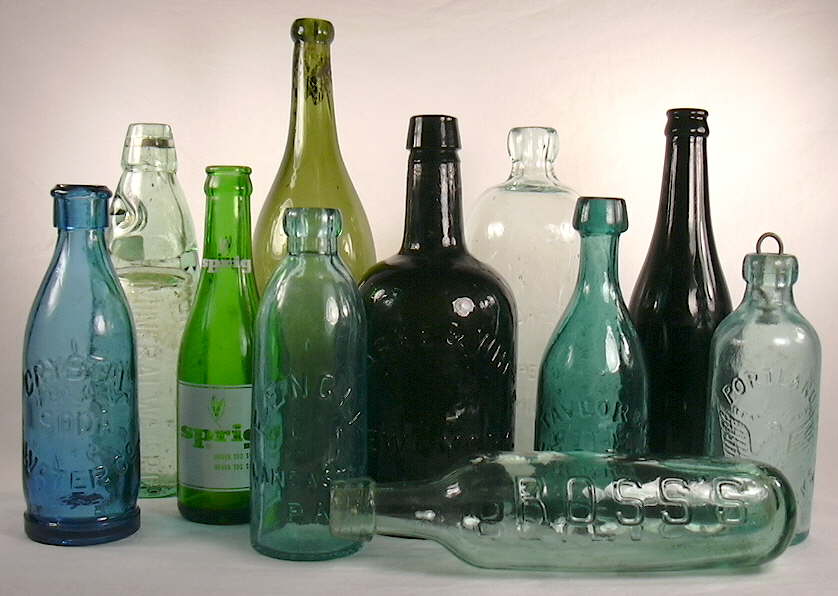
Bunch of bottles

A bottle of anger,
Bottle of stew.
A bottle for me
And a bottle for you.

A bottle of danger,
Bottle of joy.
A bottle to keep,
And then one to destroy.

A bottle of stranger,
Bottle of friend.
A bottle to start
And a bottle to end.

A bottle of languor,
Bottle of time.
And an elephant.
You can’t put everything in a bottle.


Bene scribete.


Sometimes Bees, Though

Honey Bee

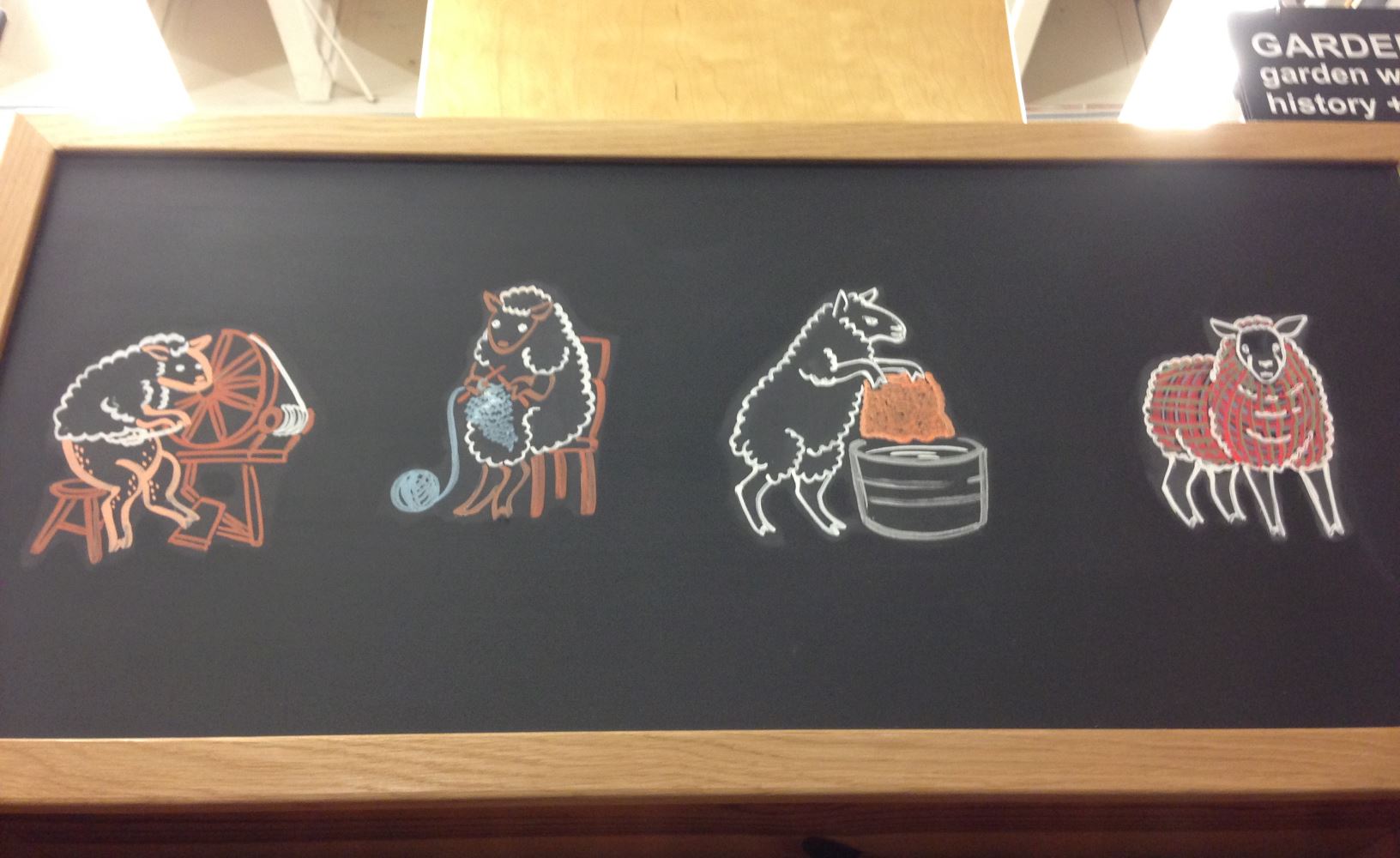
They don’t let you have bees in here


There was once a dispassionate bee who flew lazily through the loftiest neighborhood in town in a desperate search of a means to occupy its time.

So it was that when it came upon a tall green townhouse with a cracked-open window, it flew straight in and spied a lone man sitting at his desk.

The bee buzzed quietly, or perhaps quite loudly, up to the man.

“I think I shall sting you,” said the bee, for that sounded rather entertaining.

The man looked over his shoulder, a bored and plastic expression commandeering his countenance, and said, “But then you will die.”  He looked back to his work without another word.

The bee thought about this for a moment.  “Then I shall not sting you.”

The mad nodded without looking back.

The bee, however, with little better to do, buzzed up to the shelves above the man’s desk.  There, it discovered a jar of sugar sitting betwixt a dusty pair of ponderous textbooks.  This was just the sort of thing the bee needed.

Buzzing first in contemplative circles around the jar, the bee then rammed the container until it toppled over, hurtling off the shelf and shattering upon the man’s head, dousing him fully in the grainy white substance.

The man frowned extensively and sat motionless for one hour and one half of one hour.  Finally, he said, “I should have sooner you stung me.  Not because it would have been less unpleasant than being covered in my favorite sugar – for surely it would have not – but because you would have then died, and at this point in time that would please me.”

“However,” replied the bee, “bees cannot speak,” and it flew away forthwith.


Bene scribete.

Free Books from Shauna Scheets

Free Books from Shauna Scheets


Just wanted to pass the word along that my good pal Shauna Scheets is offering the current Caillte Saíocht books (The Tower of Boran and its prequel, Ascha) and her short story “Mirrored Worlds” for free on Kindle today through Monday (6-16-14).

If you haven’t checked them out, yet, here’s the perfect chance!


Bene scribete.

Artist-Signed Covers?

Signing things


A Facebook post I came across yesterday prompted an interesting discussion that I thought I’d entertain here.  An author had posted a photograph of a proof copy of his novel, and I happened to notice that the cover artist’s signature was on the cover itself.  I pointed out that such a thing is a bit tacky from a professional standpoint, and recommended asking the artist to provide a clean copy.  Other commenters, however, cast their voice in favor of the practice, asserting that the artist deserves credit.  Some went so far as to claim that it was normal (I assure you, it isn’t.  (>^-‘)> ).

Cover artists most certainly deserve recognition for their awesome work, and the appropriate place to ascribe credit is the colophon (i.e., copyright page), particularly when most artists’ imprints aren’t exactly the clearest way to read their name.  The artist has every right to sign display and standalone copies of the artwork in question, but the actual cover is production material, which is no place for embedded autographs.  Can you imagine, for instance, watching an animated film in which the contributing artists had overtly signed each cell they worked on in-frame?

It strikes me as an insecure and amateur move that needlessly diverts attention to the artist’s self, rather than letting the work stand as a representation of the story and author for which it was commissioned.  As an editor, I don’t require credit at all, let alone to sign the footers of every page I touch and point out which sentences are mine in the finished book.  As a composer, I don’t whisper my name at the end of tracks I provide for a film.  Even as an author, I don’t stamp my name within the narrative itself.  Again, as artists we are definitely entitled to credit for the work we do, but credit should go where credit goes, and art – particularly production art created for someone else – should be allowed to shine unblemished by our desire for recognition.

(As an aside, I should note that I’m excluding such instances where the artist seamlessly weaves his or her imprint into the image itself, at which point, as attention-seeking as it may still have the potential to be, it should be judged for its own artistic merit rather than at this external level.)

But this is just my take.  If you’re an author, how would you feel if your publisher or cover designer handed you a proof with the artist’s name on the cover alongside your own?  If you’re an artist, do you feel there’s a case to be made for autographing the work you provide for another’s project?


Bene scribete.

Counterpart

My youngest brother (who’s barely a teenager and already in college) wrote and directed a short film for the RØDE Reel competition, which invited participants to make a sub-five-minute feature utilizing their on-camera microphone.

The film stars actor Austin McCarthy, American Idol-ist Jesaiah Baer, and late-night-talk host Motown Maurice.

Give the finished project a look below:


Bene scribete.

A Hole in the Ceiling

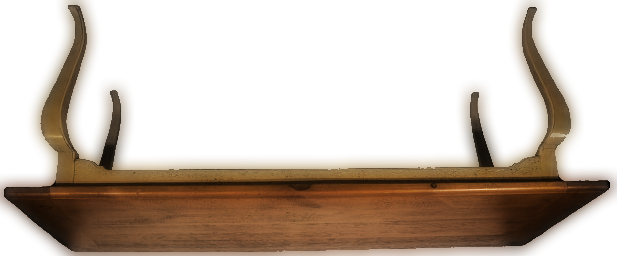
Upside-Down Table


I’ve been looking at a lot of houses these past couple months.

On Thursday, while wandering through a pretty decent tri-level, I saw something unexpected in the dining room – a hole in the ceiling above the table.  And I don’t mean some nasty, haphazard, accidental hole.  This hole was large, perfectly rectangular, and even framed, complete with a couple bars of trim segmenting it like a window to the second story.

Why would there be a hole in the dining room ceiling?  Why would there be a hole in the floor upstairs?  What could be directly above this room that would possibly make that a desired feature?  I stepped closer to get a better look at what was in the room above.

Now, I’m going to be honest with you.  When I peered up through that hole, for one brief moment, sure as sure things, the following thought legitimately took residence my mind (a very tiny fraction of a second, mind you, but long enough to actively acknowledge myself actually, for realsies, having it):

Oh, what the f***, why is there an upside-down table hanging from the ceiling upstairs!?


But, you know, I was looking at a mirror.


Bene scribete.