Realism

Unrealrth?


When writing fiction, ensuring that your characters’ actions and motivations feel natural is key to telling a relatable story – or at least one that doesn’t have your readers shaking their heads in disbelief.  We can only take so many plot contrivances before we lose the ability to take a narrative seriously.  But does that mean everything in a story should unfold in a strictly realistic manner?

It can be a tricky balance to strike.  Minimizing the required suspension of disbelief is a worthy goal, but it’s also important not to use realism as an excuse for bad storytelling.  After all, real life isn’t often that interesting, and things not happening as they usually would is the gist of what makes a story worth telling.  No one excitedly calls up a friend to explain how normal of a day she had.

The premise and certain major plot points of a story may not always be particularly realistic, but if they are in service to a theme – a powerful driving force in narrative by which reality is not bound – then that doesn’t have to be a bad thing.  We can usually swallow a few unlikely coincidences for the sake of poetic meaning, especially when they can (and should) still be grounded by the details surrounding them and characters’ reactions to them.  It’s also good to keep in mind that when people complain about unrealism, what they’re often actually harping on are stereotypes and clichés, ironically because they are, much like reality, regularly encountered.  What they truly want to see is something fresh and different.

Internal consistency is imperative, and reality is a good base model for how events might unfold in a given scenario, but don’t let a singular pursuit of realism steer you away from weaving a cohesive narrative.  If being unrealistic tells a better story, then tell the better story. We’re all just making stuff up, anyway. (>^-‘)>


Bene scribete.

Steampunk Serials: Folio 4 Now Available


The fourth volume of Shauna Scheets‘s Steampunk Serials is now available for purchase!

You can pick up a digital copy of it and the three preceding issues for 99¢ each at Amazon and other eBook retailers.


Bene scribete.

10-Minute Story: Dincton Flatt and the Cherry Grove Fiasco

Time for some more spontaneous nonsense, I suppose.

(Though I may not be feeling quite punchy enough today.)


House of No


Dincton Flatt sat cross-legged on the floor of one of his empty properties, shuffling through a deck of cards and frowning.

The sound of padding on the carpet and the soft voice of his robot coyote broke his trance.  “What’s wrong, sir?”

Flatt turned at the prompt and raised an eyebrow.  “I’m missing some cards, Featherby.”

The coyote tilted his head.  “Are you trying to say that you’re not playing with a full deck, sir?”

Flatt narrowed his eyes.

“Which cards are you missing?”

“The diamonds, of course.  It’s always the diamonds…”  He shoved the rest of the deck between Featherby’s jaws.  “Go fetch a new deck, will you?”

“I’ll see what I can find, sir,” was the coyote’s muffled response as he trotted away.

A buzzing rumble shook Flatt’s trousers, and he reached in to fetch his mobile.  “Flatt’s Flats – this is Mr. Flatt.”

A husky voice answered on the other end of the line.  “It’s Watley.”  Abberson Watley, one of his top agents.

“What is it, Watley?  News on the Clumpsworth listing?”

“No, Flatt, I’m afraid not.  There’s been a murder.”

“A murder?”  Flatt shot to his feet, eyes squinting at the horizon he could not see beyond the wall in front of him.  “A murder most foul, you say?”

Watley sighed.  “Most foul, I fear.  At the Cherry Grove property.”

“Cherry Grove?  Damnation, Watley, it’s only been two days on the market!”

“It seems people are literally dying to get into your suites, Flatt.”

“Yes, well, they could do us the courtesy of popping their clogs on the way there, now, couldn’t they?”  He wiped his free hand down his face.  “Very well.  I’ll be right over.”

Only a moment after he hung up, Flatt’s phone buzzed again.  “Yes, Watley – what now?”

The voice that answered this time was not Watley’s, however, but one which heavily implied the perfection of its owner’s immaculate white suit.  “Abberson Watley?  Come, now, Flatt, you mistake me for someone who cares as little about his closure rate as he does his attire.”

“Cheverly,” Flatt grumbled.  “I’m sure you’re looking splendid this afternoon.”

“Mm, yes, quite.  I hear there’s been a murder.”

Flatt glowered at nothing, nearly crushing the phone in his hand.  “If fact, there has.”  His voice grew low and sharp.  “Was it you?”

“Don’t be daft, Flatt.  It’s unbecoming.  You must understand, however, that a murder would never happen at one of my properties.  No, I imagine this will not be good for business.”

“Imagine what you will, Cheverly – we’ll see how things play out.”  He hung up as forcefully as modern technology would allow.

A moment or two later, he dialed Mr. Cheverly back, but only reached his answering service.

“Good,” he spoke into the recording, “is how things will play out.  Because I shall solve the murder with wit and good manners and make the property worth double.”  He hung up again and dropped the phone back into his pocket as Featherby returned with a much slimmer stack of cards in his maw.

“I’ve found the diamonds, sir,” he said, dropping them.

“Excellent work, Featherby.  But,” he began, then continued, without stopping, “where are the others?”

The coyote’s gaze wandered the room.  “I haven’t the slightest idea.”

Flatt crossed his arms and shook his head.  “Oh, Featherby, why did I build you?”

“For good times, sir.”


Bene scribete.

10-Minute Story: Dincton Flatt and the Goat that he Found

Good afternoon, those who may or may not be reading this in the afternoon.

Time for another “story” blast-written in ten minutes without forethought, I suppose.

And I call myself a writographer. Or, wait, no I don’t.


Goats are places


“Sir?” came Featherby’s voice from another room.

Dincton Flatt ignored him, absently clicking through tabs on his browser.  The immaculately dressed Mr. Cheverly had posted a photograph of his newest suit on Facebook.  It was perfect.  Flatt glowered.

“Sir?” Featherby called again.

Flatt sighed.  “What is it, Featherby?”  He looked over his shoulder, and saw his robot coyote trot into the room.

“I think you ought to see this, sir,” the coyote answered.

“Not now, Featherby, I’m quite in the middle of something.”

“Sir, even if I believed that, I would still feel pressed to tell you that there is a goat on your lawn.”

“A goat, Featherby?”

“Yes, sir, a goat.”

“Heavens, that shouldn’t be.”  Flatt pulled up an MSPaint process he always had open, filled in all black so he could look at his reflection on the computer monitor.  He was handsome as you please and blond as anything, just as he intended.  He smiled dashingly at himself and minimized the window, then stood and crossed his arms.  “Very well, then, show this goat to me.”

Featherby led him out to his front yard, where a goat indeed stood munching on the grass.

“You.  Goat,” Flatt warned.  “You mustn’t be here.  Not in the slightest.  This is simply not the place for goats.”

The goat looked up, staring blankly, then goatnoised.

“Hmm.  Quite rude.  What should we do, Featherby?”

“Perhaps we should call the goat store, sir.  Maybe it escaped and only needs to be returned.”

“No, Featherby, I do not think such a place exists.”  Flatt twisted up his mouth in consideration.  “Although, that might not be a bad thing to have around here.  Perhaps we should start one.”  Flatt approached the goat carefully.  “Well, there, fellow – how would you like to be the first in a line of magnificent goats – Flatt’s Goats?  We could sell your ilk all over Danesbury, perhaps as a complimentary add-on to our properties.”

The goat goatnoised.

Flatt frowned.

“Sir,” Featherby cautioned, “I do not mean to rain on your parade, but it might be said that this idea is not a good one.  The real-estate business is enough to manage on its own without adding livestock to your inventory.”

Flatt shook his head.  “You may be right, Featherby, but people do like goats, do they not?  And Cheverly does not have goats.”  Flatt eyed the robot.  “Does he?”

Featherby tilted his head.  “I don’t believe so, sir.”

“There.  You see?”  Flatt turned to grab the goat, but the goat backed away, causing Flatt to overreach and fall on his face.  “Mmph.”

“Sir, this is the second time you’ve fallen down this week.  People may start saying things.”

Flatt rolled over onto his back and stared up into the afternoon sky.  “I didn’t plan on any goats, now, did I?.”  He looked around, but now could not see the creature.  “Where did it go?”

“I am not certain, Sir.  Perhaps it was never here at all.”

Flatt sighed extensively.  “Oh, Featherby, why did I build you?”

“For good times, sir.”


Bene scribete.

10-Minute Story: Dincton Flatt at the Market

I have been neglectful of general writing as of late.

Thus, as penance, I shall sit down and write whatever un-premeditated nonsense comes into my head, without stopping, for ten minutes straight, and then share my shame with the world.

Apologies in advance.


Cart


Dincton Flatt strolled ponderously through the aisles of the market, eyes darting left and right in agitation.

“What is it, sir?” asked Featherby, his robot coyote.

“I need to find the pickles, of course,” Flatt responded.  He looked down at Featherby.  “Get out of the basket, would you?  Ridiculous.”

Featherby lowered his gaze in disappointment, but obliged him with a hop to the floor.  “I think the pickles would be in the back, sir, wouldn’t you?  Because of the vinegar and all.”

“I haven’t the slightest, Featherby.  But, yes, let us check there.”

The two made their way to the back of the store, and Flatt approached a woman behind the deli counter.  “Pardon, me, madame”  When she looked up, he flashed the smile of a thousand winners, the shine of his teeth alone solving the energy crisis in three small countries.

“Oh,” the woman stammered, then put on a pair of gloves.  “What can I get for you, sir?”

“Some pickles, I should think.  And some strawberry good-goods.”

“Some what, sir?”

“He means bon-bons,” Featherby offered.

“I don’t speak French when I can avoid it,” Flatt muttered.

The marketess smiled uncertainly, but got his items together for him.

Flatt looked around the market and took a deep breath.  “You know, Featherby, I like it here.  It has food, and I like food.”

“Yes, sir, I imagine you do.”  Featherby, being a robot, could not eat food, though he probably wanted to.

Flatt stroked his chin and turned around, but immediately slipped upon a puddle of grease and fell to the ground.

Featherby yipped in surprise, then nosed his face.

“I’m all right,” Flatt grumbled.  A hand reached out for him from the corner of his vision, and he drew his up to it in acceptance.  As the other hand pulled him up, his eyes set upon its owner – the immaculately dressed Mr. Cheverly.

Flatt frowned extensively, but allowed himself to be helped up, nonetheless.  “Mr. Cheverly,” he mumbled.  “You are looking rather dapper today.”

“Mm, yes, quite,” Cheverly concurred.  “Do be more careful, Flatt – there are enough dangers in this world that you needn’t add a market floor to their lot.”

“It was intentional, I assure you,” Flatt lied, brushing himself off.  “I needed to test out gravity.  You know how it is.”

The corner of Cheverly’s mouth turned down in a subtle but earth-darkening frown.  “Ah, yes, Flatt.  I’m quite certain of that.”  He strolled away in his perfect white suit.

Flatt grimaced, taking the pickles from the marketess and dropping them into his basket.  “I wonder what that dastardly fellow has in store for Danesbury.”

“Who can say?” asked Featherby.  “Perhaps he means only to torment those who fall down at markets, when they clearly shouldn’t.”

Flatt shook his head.  “Oh, Featherby, why did I build you?”

“For good times, sir.”


Bene scribete.

Sometimes Bees, Though

Honey Bee

They don’t let you have bees in here


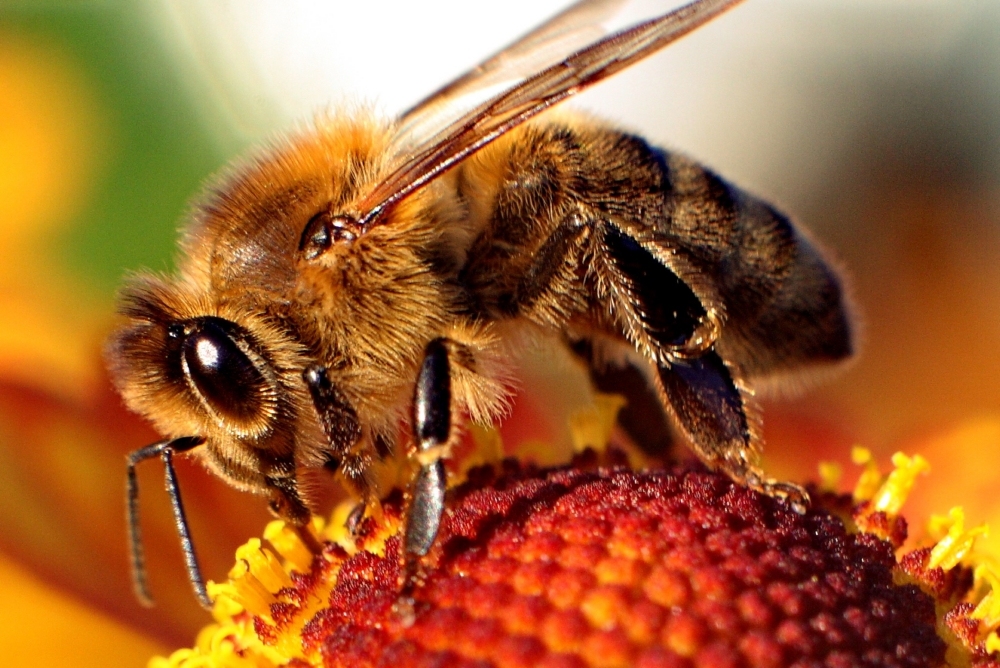
There was once a dispassionate bee who flew lazily through the loftiest neighborhood in town in a desperate search of a means to occupy its time.

So it was that when it came upon a tall green townhouse with a cracked-open window, it flew straight in and spied a lone man sitting at his desk.

The bee buzzed quietly, or perhaps quite loudly, up to the man.

“I think I shall sting you,” said the bee, for that sounded rather entertaining.

The man looked over his shoulder, a bored and plastic expression commandeering his countenance, and said, “But then you will die.”  He looked back to his work without another word.

The bee thought about this for a moment.  “Then I shall not sting you.”

The mad nodded without looking back.

The bee, however, with little better to do, buzzed up to the shelves above the man’s desk.  There, it discovered a jar of sugar sitting betwixt a dusty pair of ponderous textbooks.  This was just the sort of thing the bee needed.

Buzzing first in contemplative circles around the jar, the bee then rammed the container until it toppled over, hurtling off the shelf and shattering upon the man’s head, dousing him fully in the grainy white substance.

The man frowned extensively and sat motionless for one hour and one half of one hour.  Finally, he said, “I should have sooner you stung me.  Not because it would have been less unpleasant than being covered in my favorite sugar – for surely it would have not – but because you would have then died, and at this point in time that would please me.”

“However,” replied the bee, “bees cannot speak,” and it flew away forthwith.


Bene scribete.

Marking Dialogue

Dialogue Marks


I see a lot of talented writers these days who still have trouble when it comes to the conventions of dialogue tagging and paragraphing in narrative, so I thought I’d do a little guide on how to properly punctuate around those all-important lines of speech.

Let’s take a look at the four main types of dialogue demarcation, and I’ll give a rundown on where each of them belongs.


When to Comma

The ubiquitous comma should be the most familiar device.  Use it with explicit dialogue marking – i.e., to separate speech from a phrase which directly indicates the speech (words like ‘said’, ‘asked’, ‘shouted’, etc.). This is your basic, everyday dialogue construction.  The marking phrase can be either before, after, or in the middle of the dialogue.

“I want a hamburger,” the dinosaur pouted.

Taliana asked her husband, “Can you pass me the salt?”

“I guess chocolate is fine,” Emmy sighed, “but lemon would have been better.”

(Placement of the comma in relation to the quotation marks is another matter altogether, and up to the style you’re adhering to.  As you may have seen above, I tend to place the comma inside the quotes when the quoted matter warrants its own terminal or conjunctive punctuation, and leave it outside when it does not.)

A little less obvious – eschew the comma when the dialogue has special terminal punctuation, and the marking phrase comes after it.

“You ruined my perfect day!” Sybel yelled.

“What did you see?” Lysander whispered.

Do not use a comma with action phrases that don’t reference the speech or its manner.  This is where I see the most trouble with dialogue commas.

Frogulous picked up a hammer, “I’m gonna get you!”

“I’ve got a headache,” Susie sat down.

There is a little bit of a grey area when it comes to certain phrases that, although they may not literally be describing speech, convey its manner enough that they’ve been adopted as dialogue tags.  For instance, the following construction is fine:

“Maybe it’s a bear,” he shrugged.

But unlike the first examples, a period would also work here:

“Maybe it’s a bear.”  He shrugged.

Note, however, that the comma implies he is shrugging while speaking, whereas the period conveys a shrug post-speech.


When to Period

The period is pretty straightforward.  Use it with dialogue that is adjacent to character action statements that do not indicate the speech itself.

Charlotte surveyed the area.  “That would be impractical.”

This is implicit dialogue marking.  You can use it to indicate who is talking without having to take up narrative real-estate with speech words.  At the same time, don’t use a period separator when you are utilizing speech words.

“I can’t believe it’s not butter.” Kevinsburg muttered to his dog.


When to Colon

The colon gets a little trickier, and really, you can go a whole book without needing it.  A colon is used to separate speech when the marking phrase also describes what the speech is, or gives a basic summation of it.  If the dialogue is a clarification to a narrative statement which could stand alone, chances are a colon is called for.

Doughnut described his morning: “I woke up late, cut myself on a bar of soap, and nearly choked to death on my toast.”

Emmy clasped her paws together, recounting her plan: “If we raid the grove before midnight, I think we’ll have enough lemons for everyone!”

Note how “described his morning” and “recounting her plan” are semantically complete without the literal dialogue, whereas this is not the case with comma constructions (“He said.” doesn’t mean much on its own).  If it helps, consider that, in comma constructions, the dialogue is acting as the direct object of the speaking verb, so when the verb already has a direct object preceding the dialogue (‘his morning’, ‘her plan’), the colon is simply indicating an elaboration on it.  Lastly, keep in mind that, if you don’t feel like dealing with colons, you can usually get away with just using a period in these cases.

Now, to make things more confusing, you can also use a colon in those instances where you want to set off a large block of dialogue in its own paragraph and precede it with a direct attribution.

The spider crept in circles along its web, inching ever closer to the rodent tangled within its core.  It whispered:

“Little mouse, little mouse.  What were you doing, wandering in here all alone?  You’re much larger than my usual catch, but I shall not complain.  Little mouse, little mouse, please don’t cry; I promise that your suffering will be brief.  One small bite, one small squeeze, and you will drift off to sleep, where your mind can focus on more pleasant things.  Little mouse, little mouse, be still now.  It’s time for supper.”

Here, it is simply acting like a comma, and is only promoted to colon because of the paragraph break. Note with both of these uses that, unlike a comma, a colon is only used before a piece of dialogue.


When to Paragraph

This is where I see the most trouble when it comes to dialogue attribution on the whole.  A paragraph break is not a clearly defined and prescribed method for assigning speech like a comma or colon.  It’s another form of implicit attribution – a narrative shortcut that relies on assumptions to function properly. Let me state in brief the two main considerations for paragraphing around dialogue:

  • Wherever possible, when two or more characters interact, consolidate each individual’s speech, feelings, and greater actions to his or her own paragraph(s), and segregate them from paragraphs that focus on the other character(s).
  • A paragraph break, by itself with no other attribution, indicates that the other character is now speaking, not the character who had focus in the immediately preceding paragraph.

As always, better to explain by example:

Peggy’s eyes glanced over the table and landed on the porcelain platter.  She picked up the sandwich sitting neatly upon it and gave it a sniff.  The cloying stench of rot nearly knocked her of her feet.  “Agh.  Tim, was this your lunch?”

“Yeah, I guess,” he muttered.  He folded his arms, leaning back against the wall.

“Well…well, that’s gross.”

“Did you bring a towel?” the tire asked.

“No,” Stacey huffed.  “Wait – why are you a talking tire?”

“Because a cat gave me the ability to talk.”

“And…why was a cat able to do that?”

“Because it was a magic cat.”

“Oh, right, of course.”

In the first example, the last line belongs to Peggy, not Tim.  In the second, once the tire and Stacey are indicated as a speaking pair, each paragraph break alternatingly attributes the subsequent dialogue to the other character.

With that in mind, don’t do something like this:

Trudissima gave a dismissive wave of her hand.  “Oh, please.  The ball wasn’t my idea.”

Clenching a fist, Jimberley pursed his lips and turned his glare out the window.  The rain continued to etch away the once pristine features of his statue on the terrace, yet he couldn’t help but view it as a suitable reflection.  He’d had enough of this run-around.

“Either way, it’ll all be over by tonight.”

There’s no reason for that second paragraph break if that last line belongs to Jimberley.  As is, it reads as though Trudissima is saying it.  There are several ways to rewrite this properly:

Trudissima gave a dismissive wave of her hand.  “Oh, please.  The ball wasn’t my idea.”

Clenching a fist, Jimberley pursed his lips and turned his glare out the window.  The rain continued to etch away the once pristine features of his statue on the terrace, yet he couldn’t help but view it as a suitable reflection.  He’d had enough of this run-around.  “Either way, it’ll all be over by tonight.”

Trudissima gave a dismissive wave of her hand.  “Oh, please.  The ball wasn’t my idea.”

Clenching a fist, Jimberley pursed his lips and turned his glare out the window.   The rain continued to etch away the once pristine features of his statue on the terrace, yet he couldn’t help but view it as a suitable reflection.

He’d had enough of this run-around.  “Either way, it’ll all be over by tonight.”

Trudissima gave a dismissive wave of her hand.  “Oh, please.  The ball wasn’t my idea.”

Clenching a fist, Jimberley pursed his lips and turned his glare out the window.   The rain continued to etch away the once pristine features of his statue on the terrace, yet he couldn’t help but view it as a suitable reflection.  He’d had enough of this run-around.

“Either way, it’ll all be over by tonight,” he said.

Or even:

Trudissima gave a dismissive wave of her hand.  “Oh, please.  The ball wasn’t my idea.”

Clenching a fist, Jimberley pursed his lips and turned his glare out the window.   The rain continued to etch away the once pristine features of his statue on the terrace, yet he couldn’t help but view it as a suitable reflection.  He’d had enough of this run-around.  He grumbled:

“Either way, it’ll all be over by tonight.”

The first is probably preferable, as it keeps the character’s actions, thoughts, and dialogue together, but the others at least make it clear who is speaking.

One should also avoid constructions like this:

Crinkley threw his biscuit to the ground.  This was rubbish, plain and simple.  Were they testing his tenacity?  He could think of not a single reason to give in to the farmers’ demands.  His brother stepped up beside him.  “Let them sow their discontent; we shall see that they reap it.”

Whose dialogue was that – Crinkley’s or his brother’s?  The sudden shift to his brother may suggest the latter, but Crinkley’s thoughts and actions had the focus of the paragraph, which simultaneously implies the former.  If his brother is talking, a paragraph break would clear this right up:

Crinkley threw his biscuit to the ground.  This was rubbish, plain and simple.  Were they testing his tenacity?  He could think of not a single reason to give in to the farmers’ demands.

His brother stepped up beside him.  “Let them sow their discontent; we shall see that they reap it.”

If the line belongs to Crinkley, shifting the focus of the preceding statement would make that more apparent:

Crinkley threw his biscuit to the ground.  This was rubbish, plain and simple.  Were they testing his tenacity?  He could think of not a single reason to give in to the farmers’ demands.  He noticed his brother step up beside him.  “Let them sow their discontent; we shall see that they reap it.”

Even if we resort to explicit attribution (“[Crinkley / his brother] said”), it would still be best to include the paragraph break in the case of his brother speaking.

Now, in these types of situations, context will sometimes make it obvious who is talking, but don’t let that be a crutch.  Implicit dialogue attribution is not a place to exercise your stylistic uniqueness; subverting your readers’ built-in assumptions as to what paragraphing indicates in narrative is a recipe for confusion, and not knowing who is speaking can make for a frustrating reading experience. Adhering to convention is simply much less ambiguous in the long run (and is ultimately what allows it to work in the first place).  Clarity is a good thing!


So, in brief summation – use commas with indicated speech (she said,) and colons with clarified speech (she read the note:).  Use periods to separate non-speech actions from dialogue belonging to the same character, and paragraph breaks for dialogue belonging to a different character.

Simple, right?  (>^-‘)>


Bene scribete.

Ascha

Ascha by Shauna Scheets


This Halloween saw the release of Ascha, the first in a trilogy of prequels to Shauna Scheets‘s YA fantasy The Tower of Boran.  Ascha gives us a glimpse into the early years of High Priestess Michaeyala (The Lady of the Crystal Veil of Boran lore) as she joins the titular character at T’Sala Un Sung – Caillte Saíocht’s premiere school for the study of magic – and sets in motion the events leading up to Seraetia’s adventure in the former book.

You can pick up Ascha in print, Kindle, or other eBook formats today.

As a prequel, it can be read with or without first picking up The Tower of Boran, but if you’d like to snag a copy of Boran along with it, now is a great time to do so, for it’s just been discounted to 99¢ on Kindle and Smashwords!

Happy reading.


Bene scribete.

The Dastardly Pumpkin

The Evil Pumpkin

There was once a pumpkin – an evil pumpkin.  It was so evil that, when passing it by, people would say, “Hey, look at that pumpkin, Jim; I bet it’s evil.  Rotten to the core.”

(Everyone who passed by it did so with a man – or, in one case, a woman – named Jim.)


The spider approaches

One day, a spider approached the pumpkin.  Apparently, it was an unreasonably enormous spider.

“Pardon me, Mr. Pumpkin,” the spider began, all politeness, “but I wonder if you might tell me why it is that you are such a dastardly fellow.  Do you resent that holes were carved into your face?  Or perhaps that your innards were torn away to make a pie?”

The pumpkin did not respond, for it was a pumpkin, and pumpkins cannot speak in the slightest.

(“Then why can the spider talk?” I hear you asking, but I shan’t be answering such silly questions.)

After a time, the spider said, “Oh, I see how it is.  You are not evil – simply rude,” and left the mannerless squash behind.


The mouse approaches

A day or two later, the pumpkin was paid a visit by a little mouse (that grey blob is a mouse – I promise).

“I bet you’re not so evil,” the mouse burbled in its squeaky little voice.  “I bet you’re just lonely, sitting here on your porch all day without anyone to keep you company.”

So the mouse curled up next to the pumpkin and remained with it all day (what a sweet little mouse).

Until, that is, a cat crept forth and snatched him up.


The cat approaches

“Thank you once again, Sir Pumpkin,” the cat purred around the mouse’s tail as he dangled from her jaw, crying for help.

The pumpkin might have shed a tear, were that something a pumpkin was wont to do, but alas, it could not move an inch to save its new friend.

The cat lay down before the pumpkin and ate what she would of her catch, then set his remains within the pumpkin’s jagged mouth.  “Were it not for you, I shouldn’t get away with nearly so much.”


Poor pumpkin

In the final hour of Halloween, when all the children had gone home and the streets were empty, the pumpkin so vile it would eat its only friend sat alone on its porch, beneath a doorbell unrung and candy untouched.

“But I am not evil…” the pumpkin finally murmured aloud, making a proper liar of me, but not a soul was around to hear it.

And it was absolutely right – for, you see, pumpkins, as it turns out, are secretly fruits, which on the whole tend to be much more magnanimous than their strictly vegetable brethren.  Unless, of course, we’re speaking of durians, which are little if not sin and corruption condensed into fruit form.

Cats, on the other hand, usually are evil, but I think that’s why we as a society appreciate them.

So I guess what I’m trying to say is: don’t be so quick to blame inanimate plant matter for acts of malice when there’s a cat in the vicinity.  What are you, a crazy person?


Have a happy Halloween, everyone.


Bene scribete.

On Ghostwriting

Writing ghost

Money is the universal shortcut.  You can get just about anything with it.  Sometimes for a lot less than you’d think.

In my line of editing work, I come across a lot of want-ads for ghostwriting.  Now, I can look the other way when it comes to surrogate writing in certain scenarios – you’re a not-so-eloquent public figure who needs the notes and rough drafts for your topical book or memoir worked into something fluid?  Sure, O.K.  But I’m talking about ghostwriting for fiction.  Things like: “I need a sci-fi novel written.  Preferably something to do with space exploration.  Need it to be around 70,000-80,000 words.  Must sign NDA and forgo copyright. I’m willing to pay up to $500.”  (No joke!)  It shouldn’t come as a surprise that there would be a few people out there with that kind of audacity, but I see a dozen of these a day.  And what’s even crazier – these listings get a ton of responses!

It’s a little hard to believe.  I can’t see the appeal to either side of this arrangement.  Does anyone really love the writing process itself so much that they’d be willing to undertake the grueling process of producing a novel for pennies an hour, only to forsake any rights and claims to their own creation upon completion?  Is anyone so desperately enamored with the idea of being known as a writer that they would be satisfied with the hollow “achievement” of putting their name on someone else’s work?  Apparently the answer is a disturbingly frequent yes on both accounts – it’s a big industry.  It baffles me.  It really does.

If I’m being entirely honest, I suppose I would consider ghostwriting a novel for someone if I were offered an absurd amount of money to do so (financial freedom to pursue other projects is nothing to take lightly), but these jobs are being offered at too comical a salary to be considered “just work”.  I could never quite comprehend the sentiment behind the other side of the table, though.  If you want to be a writer then, you know – write!  At the very least seek a co-author if you need help with a specific book.  I simply can’t see fiction-ghostwriting as something that has any reason to be a thing – particularly not as big of a thing as it is.

But I’m curious to hear others’ thoughts on the matter.  Have you ever had experience with ghostwriting (from either side)?  Would you ever consider it?  Am I taking crazy pills?


Bene scribete.


(Want to win a free signed copy of the non-ghostwritten The Amber Ring? Check the link for details. No entrants yet, so your odds are sitting at 100%!)