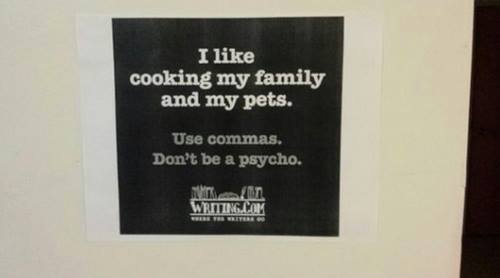
Criticism

The critique of a creative work-in-progress can be a touchy, sensitive process, but a nonetheless imperative one if the work is to be taken seriously.

As both an author and professional editor, I regularly find myself on the providing and receiving ends of constructive criticism.  So, here are some things I like to keep in mind for each scenario.


EwGetting Criticism

Convey what kind of feedback you’re seeking.  Do you just want mechanical errors pointed out?  Phrasing suggestions?  Or simply overall thoughts on the flow of the story?  Readers will have an easier time helping you if they know what they’re supposed to be looking for.

(More)


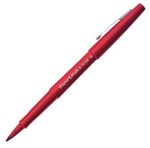
A red pen.Giving Criticism

Try not to volunteer to critique a piece if you can’t reasonably expect to have the time or motivation to get back to the writer about it.  Silence can be even more disheartening than a bad review.

(More)


A final point to consider – if, like myself, you are an editor as well as a writer, don’t be tempted to feel like that excuses you from the need to seek out feedback and a solid proofread on your own work.  Your writing may be syntactically cleaner than par, but editing is often more about defeating expectation bias – catching what we’re too close to the work to see – than it is merely polishing the language.  (>^-‘)>


Bene scribete.

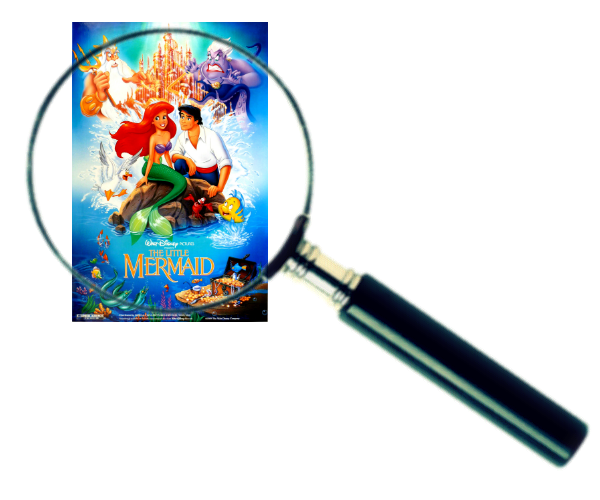
The Little Mermaid

The Small Mermaid?

…wait a minute; why is it called The Little Mermaid?  I mean, it’s been close to twenty years since I’ve seen the film (or read Hans Christian Anderson’s disturbing original story, for that matter), but I don’t seem to recall her being notably smaller than other mermaids.

Or her size being an issue in any sense, really.

Hmm.


Bene scribete.

That’s Crea-zy

Whaaaat?

A few days ago, I came across this blog post by Matthew Schuler, which quotes a passage from Mihaly Csikszentmihalyi’s Creativity: The Work and Lives of 91 Eminent People that discusses one often-encountered disposition of “creative people” that can make them seem a little nuts – i.e., the tendency to simultaneously exhibit contradictory traits.

Read the examples he gives, if you get a chance, and see how many of them apply to you.  Do you consider yourself a creative type, and do you identify with this prognosis?  Or are you not particularly imaginative, but still find yourself nodding along?  I’m curious as to what degree of this vacillating temperament can indeed be associated with creativity versus general human caprice.

Either way, I can certainly relate to a propensity for considering, if not accepting, two opposing extremes.  It stems from an understanding that absolutes are virtually non-existent on the broad scale.  One way of thinking, one side of an issue, one solution for every problem, is never going to be 100% right.  Rules and customs, whether imposed by self or society, are comforting because they are pre-defined paths to follow, a relief to the burden of having to think, but the complexity and variability of the circumstances we apply them to frequently call for something more dynamic.  Perhaps, then, it is the creativity in us that is not afraid to step outside of those guidelines when we need to, to embrace the call for further contemplation, and tailor our responses to the situation at hand rather than expecting it to conform to a preconceived, oversimplified view of the world.


But, on the other hand, maybe there is a certain amount of craziness involved with being creative.  As (the coincidentally similarly named) Cristian Mihai pointed out on Are Writers Crazy? last week, one version of insanity (repeatedly doing the same thing while expecting different results) is not altogether different from the notion of perseverance, and what do we do as artists and thinkers but continuously put our work and ideas out there in the hope that one of those times, we’ll be recognized for it?  (>^-‘)>


Bene scribete.

Ascha

Ascha by Shauna Scheets


This Halloween saw the release of Ascha, the first in a trilogy of prequels to Shauna Scheets‘s YA fantasy The Tower of Boran.  Ascha gives us a glimpse into the early years of High Priestess Michaeyala (The Lady of the Crystal Veil of Boran lore) as she joins the titular character at T’Sala Un Sung – Caillte Saíocht’s premiere school for the study of magic – and sets in motion the events leading up to Seraetia’s adventure in the former book.

You can pick up Ascha in print, Kindle, or other eBook formats today.

As a prequel, it can be read with or without first picking up The Tower of Boran, but if you’d like to snag a copy of Boran along with it, now is a great time to do so, for it’s just been discounted to 99¢ on Kindle and Smashwords!

Happy reading.


Bene scribete.

The Dastardly Pumpkin

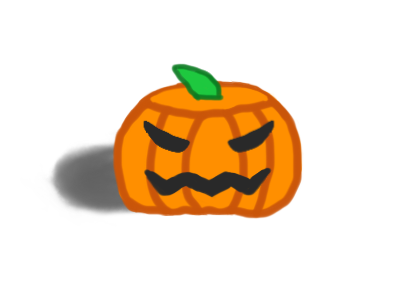
The Evil Pumpkin

There was once a pumpkin – an evil pumpkin.  It was so evil that, when passing it by, people would say, “Hey, look at that pumpkin, Jim; I bet it’s evil.  Rotten to the core.”

(Everyone who passed by it did so with a man – or, in one case, a woman – named Jim.)
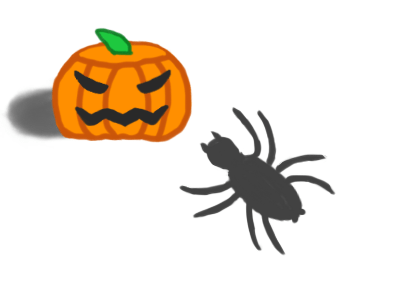
 

The spider approaches

One day, a spider approached the pumpkin.  Apparently, it was an unreasonably enormous spider.

“Pardon me, Mr. Pumpkin,” the spider began, all politeness, “but I wonder if you might tell me why it is that you are such a dastardly fellow.  Do you resent that holes were carved into your face?  Or perhaps that your innards were torn away to make a pie?”

The pumpkin did not respond, for it was a pumpkin, and pumpkins cannot speak in the slightest.

(“Then why can the spider talk?” I hear you asking, but I shan’t be answering such silly questions.)

After a time, the spider said, “Oh, I see how it is.  You are not evil – simply rude,” and left the mannerless squash behind.


The mouse approaches

A day or two later, the pumpkin was paid a visit by a little mouse (that grey blob is a mouse – I promise).

“I bet you’re not so evil,” the mouse burbled in its squeaky little voice.  “I bet you’re just lonely, sitting here on your porch all day without anyone to keep you company.”

So the mouse curled up next to the pumpkin and remained with it all day (what a sweet little mouse).

Until, that is, a cat crept forth and snatched him up.


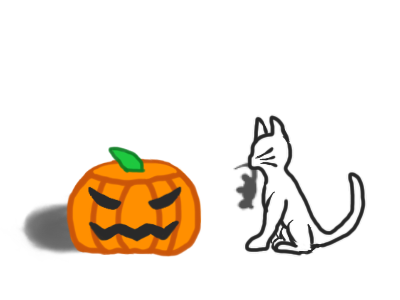
The cat approaches

“Thank you once again, Sir Pumpkin,” the cat purred around the mouse’s tail as he dangled from her jaw, crying for help.

The pumpkin might have shed a tear, were that something a pumpkin was wont to do, but alas, it could not move an inch to save its new friend.

The cat lay down before the pumpkin and ate what she would of her catch, then set his remains within the pumpkin’s jagged mouth.  “Were it not for you, I shouldn’t get away with nearly so much.”
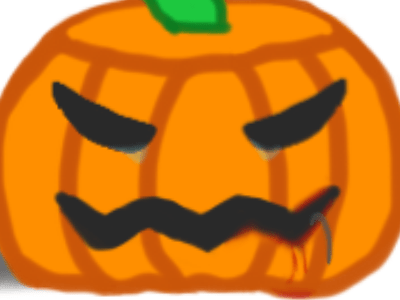
 

Poor pumpkin

In the final hour of Halloween, when all the children had gone home and the streets were empty, the pumpkin so vile it would eat its only friend sat alone on its porch, beneath a doorbell unrung and candy untouched.

“But I am not evil…” the pumpkin finally murmured aloud, making a proper liar of me, but not a soul was around to hear it.

And it was absolutely right – for, you see, pumpkins, as it turns out, are secretly fruits, which on the whole tend to be much more magnanimous than their strictly vegetable brethren.  Unless, of course, we’re speaking of durians, which are little if not sin and corruption condensed into fruit form.

Cats, on the other hand, usually are evil, but I think that’s why we as a society appreciate them.

So I guess what I’m trying to say is: don’t be so quick to blame inanimate plant matter for acts of malice when there’s a cat in the vicinity.  What are you, a crazy person?


Have a happy Halloween, everyone.


Bene scribete.
Hot h’What?

Hot...what, now?

Put chalk in your hair, kids


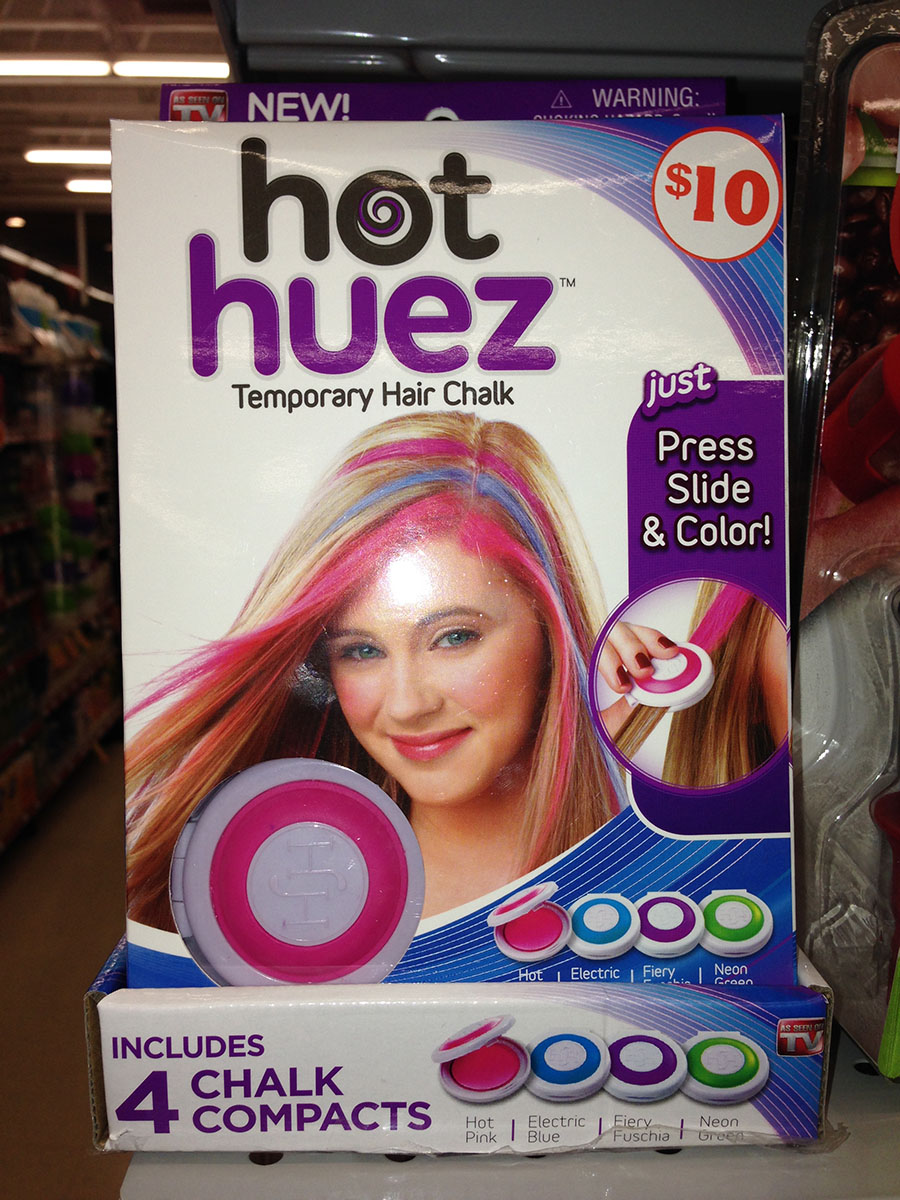
Saw this…thing…in the store the other day.  “Hot (h)wezz”?  What…why would anything be called that?  It sounds like, well, Spanish slang for something filthy.  What—what does it mean?

I have a habit of taking pictures of weird products, so I did just that.

Then, when sharing my photographic incredulity with others, I was promptly informed that it was “hot hues”…just, you know, spelled stupidly.  Ohhhh.

…that’s not nearly as funny.

Anyway, the moral of the story is: don’t spell things stupidly, or they might end up sounding…let’s say…implicitly unsavory.


Bene scribete.

Singular ‘They’

Lots of theys


“Did someone leave their wallet in here?”

It’s not unusual to hear this sort of sentence in English.  The sex of the subject (‘someone’) is unknown, so the speaker uses the pronoun ‘they’, even though the subject is not plural.  Now, as a copyeditor (and otherwise general linguistic snob), I may be expected to rail against such usage, but alas – I am, in fact, about to do just the opposite.

The problem with this sort of construction is that English, like many languages, doesn’t have explicit fourth person* syntax, so any way we cast it becomes a sort of workaround.  And, when it comes down to it, singular ‘they’ is simply the least ambiguous and awkward of a lot of bad options.

* (“What the #&@$ is fourth person!?” a non-super-language-nerd might ask.  Well, I’m glad you did: a fourth-person entity is one that is unknown, generic, or irrelevant.)

Let’s take a moment to consider the alternatives.

  • The formally prescribed solution is to randomly choose a gendered third-person pronoun: “Did someone leave his wallet in here?”  The issue with this option, aside from the awkwardness of randomly assuming a gender, is that it creates a particularly strong pronoun-antecedent disagreement, so the initial impression is that you are asking if an unknown someone left an identified other person’s wallet in here.
  • The construction “Did someone leave his or her wallet in here?” is also a preferred one, but it is needlessly cumbersome.
  • ‘One’ is the closest thing English has to a real fourth-person pronoun.  So you could ask, “Did someone leave one’s wallet in here?”  But that sounds terribly stilted.
  • Similarly, ‘someone’ itself is, in essence, a fourth-person pronoun as well, but “Did someone leave someone’s wallet in here?” recreates the pronoun-antecedent divorce that makes it sound like you could be talking about two different people.
  • You could subvert the need for the second pronoun altogether by using passive voice: “Was someone’s wallet left in here?”  There’s nothing inherently wrong with that phrasing, but it changes the focus of the inquiry to the presence of the wallet itself rather than the owner you’re trying to reunite it with.
  • You could try a number of other rewordings, but each would have a slightly different meaning than what you’re intending, and they would only be applicable to the specific sentence.

So we’re left with ‘they’.  It’s hardly ideal, but it’s cleaner than the other choices, and it’s used so often informally that it now sounds the most natural, and its meaning in context is immediately clear.  Reusing plural terms for certain singular cases is not without precedent (we have only to look at the subjunctive form of “to be”), and ‘they’ is frequently used in other fourth-person constructions, anyway (“You know what they say.”).

Thus, while I’m not about to encourage anyone to start using singular ‘they’ in formal writing, I would advocate for a grammatical shift in that direction, if for no other reason than to be relieved of the constant need to convolute phrasing that avoiding it entails.  (>^-‘)>


Bene scribete.