The Amber Ring – WordPress Giveaway

The Amber Ring

When the twelve-year-old Heroine of the Fairwoods dies, her morose twin sister reluctantly joins her trusty gryphon sidekick on a quest to save the enchanted land in her stead.


The giveaway I did at Goodreads a few months back got some decent traction, so I figured I’d do a quicker, smaller one here just for my fellow ‘bloggers.

Let’s try this: If you’d like a chance to win a free signed copy of this cynical fairytale novella, just reblog this post.  I’ll gather up the names from the track-back comments, throw them into a randomizer, and announce a winner in two weeks (July 21, 2013).  I don’t anticipate many entrants, so your chances should be pretty good!


[This giveaway is for the physical (print) edition.  The eBook, as always, can be acquired for free at your favorite retailer (Kindle | iBooks | Nook | Sony | Kobo) or direct download (ePUB | PDF).]


Bene scribete.

Death Scene: Turkish Style

Death scenes can be tricky to write, particularly for primary characters.  Do too little, and it can feel jarringly abrupt, not allowing the reader (or watcher) to properly absorb within the moment that the character has legitimately just met his end.

Do too much, on the other hand, and you may end up with something like this:


(…all right, I may have just wanted an excuse to post that video)


Bene scribete.

A Silly Scene from The Amber Ring

Only a few days left to enter the drawing for one of three signed copies of The Amber Ring.


Goodreads Book Giveaway

The Amber Ring by A.L.  Walton

The Amber Ring

by A.L. Walton

Giveaway ends May 15, 2013.

See the giveaway details
at Goodreads.

Enter to win


And, as always, you can get the eBook for free right now at iBooks, Sony, Kobo, Nook, or download the PDF here!

Still aren’t convinced you want to give it a shot? I don’t blame you – time is precious and new things are iffy. But in an effort to maybe pique a little more interest, I thought I’d share one of my favorite scenes in the book (at least one of the most fun to write), wherein the reluctant heroine Maya and the gryphon Camden encounter the mirthfully single-minded Fairy Cobblers.

Hope you enjoy!


Amber Ring Title

“Ho!  Come in, come in!” exclaimed a boisterous little man in a tan shirt and maroon overalls, moments after Maya knocked on the door of his towering boot-shaped house.  “Honey-bear, we have customers!” he called over his shoulder.

“What’s that, sweetie-muffin?” a woman’s voice came in return.

“Customers, cherry-doll, customers!”

The woman came quickly into view, rushing up to meet Maya and Camden as they stepped through the doorway.  She wore olive overalls and a white blouse, and was clapping her hands together with excitement.  “Not just any customers, lovey-cakes, but the Heroine of the Fairwoods herself!”

“Actually,” Cam winced, holding up a talon.  “This is her sister, Maya.  Sofia’s…”

“She’s dead,” Maya said bluntly.

The couple blinked, sharing a surprised look.

“We’re very sorry to hear that,” murmured the man, taking off his cap – which matched his overalls – and holding it against his chest.

“She was just the loveliest girl,” the woman added, shaking her head at the floor.

After an awkward moment of silence, the man put back on his cap.  “Well, we’re glad to meet you in any case, Miss Maya.”  He pointed a thumb to himself.  “I’m Pilder, the husband.”

The woman copied the gesture.  “I’m Hilma, the wife.”

Together, they finished, “And we’re the Fairy Cobblers!”

Maya stared for a moment.  They were about goblin-height, these shoemaking spouses, and had pointed ears.  They looked like they were perpetually on the edge of middle age.  Lesser elves.

“Nice…to meet you,” she managed, taking her first good look around the cobblers’ combined home-and-workshop.  Shoes were piled at every wall from floor to ceiling.  Boots, sandals, clogs, loafers, heels, and slippers in all shapes and sizes covered every spare surface, spilling from shelves and closets and even the chimney.

What was it with fairy-types and shoes, anyway?

“See anything you like?” Hilma asked, noticing her eyes wander.

Maya found it hard not to gawk at the dizzying array of footwear.  There must have been over a thousand pairs just within her sight.  “There certainly are a lot of…shoes.”

“Of course!” Pilder grinned, swinging a fist across his chest.  “We’re cobblers!”

“Are you stocking these all up for a large order?”

“Well…not exactly.”  The shoemaker shrugged abashedly, scuffing the floor with his boot.  “It’s only just…not a lot of Fairwoods citizens actually wear shoes, so…they sort of kind of pile up a little bit.”

Maya raised an eyebrow.  “If the shoes you have aren’t getting taken, why keep making more?”

“Because we’re cobblers!” Hilma cheered.

Maya exhaled lengthily.

“So!”  Pilder clasped his hands together and rubbed them briskly.  “Shall we get you fitted up?”

“Good thinking, sugar-loaf!” his wife chimed.  “I’ll get the big boy.”  She was already behind Camden, grabbing at his hind paws with measuring tape in hand.  He looked back, startled, then tried to pull away gently, turning, but the elf woman spryly and persistently kept up.

“That’s all right,” Maya told the couple, holding up her hands.  “We didn’t come here to get shoes.”

Pilder froze, his expression drooping.  Then he laughed – a nasal, rickety sound – and tapped his foot.  “Didn’t come to get shoes, she says!  Did you hear that, candy-bean?  We’ve got a jokester on our hands!  Ha!  Ho!  Didn’t come to the cobblers for shoes!  That’d be a real cat-at-the-end, wouldn’t it?”  He chuckled again and winked at Maya, then turned and knelt to start digging through piles of his product.

Maya twitched.  “I’m…no, I really—we only came here to ask you a question.  Just a question.”

The cobblers both stopped what they were doing and shared a disappointed look.  “No shoes?” Pilder asked, voice nearly despondent.

“No shoes,” Maya confirmed.

Pilder rose and sighed dramatically, hunching his shoulders and slipping his hands into the pockets of his overalls.  His eyes bored holes in the ground for several seconds, and then he took a sharp breath and looked back up to Maya, jolly composure suddenly regained.  “All right, then!  No biggie!  What can we answer for you, Miss Maya?”

Maya cast a dubious glance back toward Hilma, who seemed to have undergone the same transformation, then asked, “Do you know Gnarble—Gnilling—er, Gnibling—”

“Gnarlington Gnibblemeister?” Camden saved her.

“The gnome geographer?” Hilma intoned.

“The geographer gnome, butter-button!” Pilder corrected.

Hilma put a hand to her chin.  “I don’t know, cookie-lumps, I swear it was gnome geographer…”

“Geographer gnome, coffee-bird!  He’s a gnome who is a geographer.”

“But isn’t he also a geographer who is a gnome?”

“He was a gnome before a geographer, I think you must agree!”

“So shouldn’t gnome come first?”

“No, jelly-dove, geographer is the descriptor, the distinguisher, the—”

“Do you know him?” Maya interrupted.

“Oh!” Hilma touched her chest, smiling apologetically.  “Yes, of course!  We sold him the most dashingly dapper pair of boots just a few weeks back.”

“And you delivered them to his house?”

Hilma clapped her hands.  “We sure did!”

Finally, they were getting somewhere.  “Can you tell us where he lives, then?  We need to go see him.”

The elf put on a pouty face and looked to her husband.

“Well, you see…”  Pilder scrunched up his features, making fists and tapping his knuckles together.  “The thing is…that’s confidential customer information!  We can’t just go telling anyone that, even if you are the Heroine’s sister…”

Maya sighed.  “But you’re the only ones we’ve found who seem to know his current whereabouts.  It would be a very big help to us.  I’m sure he wouldn’t mind.”  He probably actually would, Maya had to imagine, but it seemed like the thing to say.

“It’s about the goblins,” Cam added.  “He can tell us what we need to know to stop them.”

“Goblins,” Pilder grumped, nose reddening.

“Those dirty little devils stole half our leather supply,” his wife mourned.

“And their blasted weasels killed our guard-pig, Spoinky.”  Pilder shook his head, raised an eyebrow to Hilma, who nodded, then turned a grin on Maya.  “I’ll tell you what, Miss Maya – maybe we can make a little fairy bargain.  If you can answer us a riddle, then we’ll tell you where ol’ Gnarly hangs his hat.”

“A riddle?” Maya echoed.  That sounded like a hassle.

Pilder bobbed his head, then cleared his throat into his fist.  “I’m not always right, but I’m never wrong.  I have a tongue and a throat, but no mouth to speak of.  I move better when tied up.  What am I?”

Maya groaned, eyeing Camden with the expectation of shared incredulity, but saw him deep in concentration, mouthing the riddle to himself.  “A shoe,” she answered, pinching the corners of her eyes.

The cobbler blinked.  “O.K.  O.K., that may have been an easy one.  You try, caramel-puff.”

“Sure thing, vanilla-boo, I’ve got just the one!”  Hilma pumped a fist, then gave Maya a devious smile.  “You tread on my sole, yet—”

Maya cut her off, “A shoe.  Are you a shoe?”

Hilma stood in silence, her mouth still hanging open, then folded her arms and nodded gravely.  “Very clever, this one.  I think she’s got us beat, cricket-pie.”

Even Pilder seemed to double-take at that one.  “Yes, yes,” he conceded.  “Very well.  We’ll give you the gnome’s current address.  But on one condition – you must pick out a new pair of shoes to take with you!  No charge, of course.”  He winked at his wife.  “Do we have a deal?”

“You’ll tell us what we need to know if I let you give me free shoes?”  Maya slipped her hands into her pockets and shrugged.  “Yeah, that sounds fine.”


Bene scribete.
Wednesday Night

Uhhh…poem.


Brown moon


“This pizza is the worst,” I said
And punched a zebra in the head,
Then rode the escalator to
The brown side of the moon.

“This place is rather bleak,” I said,
But still, I needed to be fed.
Well, then an alligator came
And offered me a spoon.

“I have some jam to try,” he said,
“It makes a pretty tasty spread.”
I took the jar and stirred it up
And thanked my swampy friend.

“This jam may do the trick,” I said,
But first I’d need to find some bread.
So off I ran to Mars to put
My hunger to an end.

“I’d like a piece of toast,” I said,
“Though pancakes would suffice instead.”
A rabbit heard my plea and waved
Me over to her shop.

“I have a biscuit here,” she said,
“You’re welcome to it – go ahead!”
But as I picked it up I heard
A nosy Martian cop.

“You can’t be doing that,” he said,
Then over to my side he sped
And seized my wrist before I had
The chance to take a bite.

“You’re absolutely right,” I said,
And went back home to go to bed.
Turns out I had forgotten I
Don’t eat on Wednesday night.


Bene scribete.

______________________________

After some technical difficulties, the drawing for The Amber Ring is back up. Enter below for a chance to win a free signed copy!


Goodreads Book Giveaway

The Amber Ring by A.L.  Walton

The Amber Ring

by A.L. Walton

Giveaway ends May 15, 2013.

See the giveaway details
at Goodreads.

Enter to win

The Amber Ring – Giveaway

Amber Ring Title

Want a free signed copy of my whimsically dark fairytale novella? Then just enter the drawing below (all you need is a Goodreads account). You could be one of three to win!


Goodreads Book Giveaway

The Amber Ring by A.L.  Walton

The Amber Ring

by A.L. Walton

Giveaway ends May 11, 2013.

See the giveaway details
at Goodreads.

Enter to win


Don’t want to wait until next month (or aren’t in an eligible territory)? You can get the eBook for free at most major retailers (iBooks | Sony | Kobo | Nook).

Or download the PDF right here!


Bene scribete.

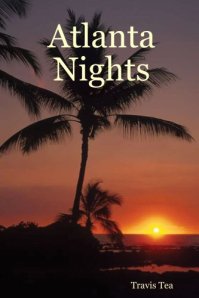
Atlanta Nights

I suddenly realized that I haven’t talked about this book, yet.  An unfortunate oversight that I must now rectify, as it is something every aspiring author should read:


Atlanta Nights Cover


The story behind Atlanta Nights is classic.  About ten years ago, a group of thirty-some science fiction and fantasy authors, led by James D. Macdonald, set out to expose PublishAmerica as a non-discriminating vanity press against their claims of being a selective, traditional publisher (partially in response to the firm’s derogatory public statements about the sci-fi/fantasy genres and their writers).  The plan was simple – to create the most magically awful novel ever written, and get PublishAmerica to bite.

Each author, skillfully penning his or her most deliberately atrocious narrative, wrote a single section based on a vague outline, without cross-collaboration.   The result was a glorious disasterpiece.  Chapters repeat or are missing (one is even generated by a computer), the same events recur in different ways, characters change motivation, appearance, and sex, and the plot is wildly incoherent.  When finished, they submitted the compiled manuscript to PublishAmerica under the pseudonym “Travis Tea” (ha-ha) to see if they would accept it.

They did.

A couple months later, the group revealed the hoax to the public.  Conveniently, the very next day, PublishAmerica retracted their offer to publish the book, stating that upon further review, it did not quite meet their standards.  Gee.  (>^-‘)>

Fortunately, the group turned around and published the book on Lulu for the rest of the world to see.  And see it you should.  It’s hilarious.  Each chapter plays up some common mistake, bad writing habit, or other.  It’s effectively a negative blueprint for good storytelling.  A perfect example of everything not to do.  What makes it especially great is that it straddles a line where you can almost take it seriously – we’ve all seen bad but well-intentioned writing – and that gives its absurdities just the right punch.  As they say, “It’s funny ’cause it’s true.”

But I’ve barely scratched the surface of everything that’s so fantastically wrong with this book.  Just do yourself a favor and check it out – your mind may burst, but you might end up a more judicious writer for it.  (>^-‘)>

The paperback is available in the usual places, and they offer the manuscript PDF for free download.


“The world is full of bad books written by amateurs. But why settle for the merely regrettable? Atlanta Nights is a bad book written by experts.”

— Teresa Nielsen Hayden


Bene scribete.

Bagel Guillotine

This is an actual thing that exists.


Bagel Guillotine?

For treacherous bagels


I guess it’s not so much strange that it exists, but strange how it’s presented.  For one, violently executing your breakfast is sort of grim imagery.  For two, it says “Slices Bagels Safely!”, which is really just telling you that it doesn’t trust you to use a knife like a normal human being without cutting your hand off in the process.  For three, bagels don’t have heads.

Anyway, here’s a poem:


“Guilty!” cried the piece of toast
(The one the bagel hated most)
And had a bacon friend of theirs
Escort the bagel up the stairs.

The English muffin wept and wept,
For promises she hadn’t kept.
She’d pleaded with the toast in vain;
He’d told her she deserved the pain.

The toast then strapped the bagel down
Upon the deck before the town
And wasted not a single breath
Before pronouncing bagel’s death.

“Have any last requests?” inquired
The egg whom he had once admired.
“Just one,” the breadly circle said,
“Regarding how I’m to be spread:
With cream cheese I go best, you’ll find,
But please, sir – not the salmon kind.”


Salmon cream cheese offends me.

And bagels don’t have heads.


Bene scribete.

Lion-Eating Poet in the Stone Den

A police cop

“Police police police police police police police.”
– Police


Oh, homonyms and homophones.  They let us construct statements such as the above (which, while a ridiculous thing to say, is a perfectly valid English sentence that could be rephrased as “Cops that are regulated by other officers regulate cops that are also regulated by other officers.”).  If you want some extra-specific vocabulary, the noun ‘police’ and the verb ‘police’ are polysemes.

Maybe it’s just me, but I find something inherently humorous about legitimately using the same word (and to a lesser extent, letter) too many times in a row.  You can almost feel the language glaring hatefully at you, like a cop (that may or may not be regulated by other cops) watching a criminal get away on a technicality.

One popular example used to demonstrate the importance of punctuation goes something like “John while I had had had had had had had had had had had proper grammatical structure.”  When we add some orthographic organization, this string of madness actually makes sense – “John, while I had had ‘had’, had had ‘had had’; ‘had had’ had had proper grammatical structure.”

Perhaps the craziest exercise in homophony, however, is the Chinese ‘poem’/riddle by linguist Yuen Ren Chao entitled 施氏食獅史 (usually called “Lion-Eating Poet in the Stone Den” in English).

In its written form, it’s understandable enough (if you know Chinese, anyway):

石室詩士施氏,嗜獅,誓食十獅。
氏時時適市視獅。
十時,適十獅適市。
是時,適施氏適市。
氏視是十獅,恃矢勢,使是十獅逝世。
氏拾是十獅屍,適石室。
石室濕,氏使侍拭石室。
石室拭,氏始試食是十獅。
食時,始識是十獅屍,實十石獅屍。
試釋是事。


It translates to something like:

In a stone den was a poet called Shi, who was a lion addict, and had resolved to eat ten lions.
He often went to the market to look for lions.
At ten o’clock, ten lions had just arrived at the market.
At that time, Shi had just arrived at the market.
He saw those ten lions, and using his trusty arrows, caused the ten lions to die.
He brought the corpses of the ten lions to the stone den.
The stone den was damp. He asked his servants to wipe it.
After the stone den was wiped, he tried to eat those ten lions.
When he ate, he realized that these ten lions were in fact ten stone lion corpses.
Try to explain this matter.


But, when read aloud in (or transliterated from) Mandarin, it becomes practically incomprehensible:

Shíshì shīshì Shī Shì, shì shī, shì shí shí shī.
Shì shíshí shì shì shì shī.
Shí shí, shì shí shī shì shì.
Shì shí, shì Shī Shì shì shì.
Shì shì shì shí shī, shì shǐ shì, shǐ shì shí shī shìshì.
Shì shí shì shí shī shī, shì shíshì.
Shíshì shī, Shì shǐ shì shì shíshì.
Shíshì shì, Shì shǐ shì shí shì shí shī.
Shí shí, shǐ shí shì shí shī shī, shí shí shí shī shī.
Shì shì shì shì.


It’s not perfectly homophonic because of tonal distinctions, but still.  (>^-‘)>  There’s a bit more variation when spoken in the other dialects that use the Chinese ideography (like Cantonese or Taiwanese), but either way, it’s really only followable in writing.


Languages are generally engineered to be as clear as possible, and where they fall short of that goal is something a writer should keep in mind – plus, abusing those problem areas can produce some entertaining results!


Bene scribete.